
Commercial HVAC Preventive Maintenance for High-Occupancy Buildings
Introduction
A commercial HVAC system has a demanding job in a high-occupancy building. It must maintain comfortable indoor temperatures, support adequate ventilation, manage humidity, and operate reliably while dozens or hundreds of people use the space throughout the day. When the system struggles, the effects can spread quickly, from uncomfortable employees and frustrated customers to indoor air quality concerns, equipment interruptions, and unexpected repair expenses.
Preventive maintenance helps building owners and facility managers address developing problems before they become disruptive failures. Instead of waiting for a rooftop unit to stop cooling or a ventilation system to lose performance, maintenance teams inspect equipment, identify wear, clean critical components, and verify that the system operates as intended.
High-occupancy environments deserve particular attention because their HVAC demands change with the number of people present, operating hours, outdoor weather, and activities inside the building. A restaurant, office tower, school, healthcare facility, and retail center may all need different maintenance priorities, even when they use similar equipment.
Understanding how commercial HVAC preventive maintenance works makes it easier to plan service, control operating risks, and protect the people who depend on a comfortable indoor environment. A consistent maintenance program also helps businesses make informed decisions about repairs, equipment upgrades, and long-term operating budgets, supported by insights from a reliable commercial HVAC contractor.
What Is Commercial HVAC Preventive Maintenance?
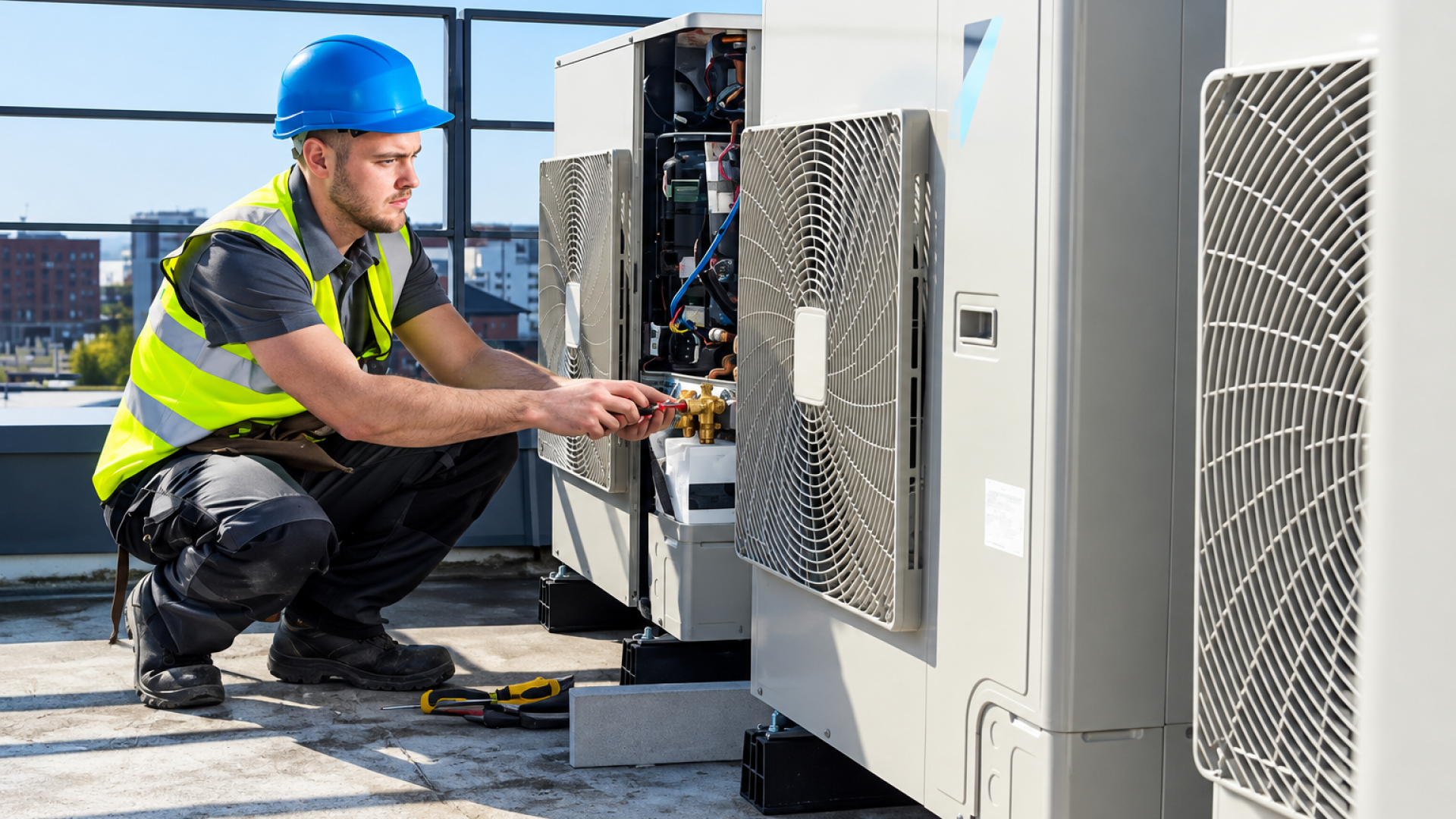
Commercial HVAC preventive maintenance is a planned program of inspections, cleaning, testing, adjustments, and component servicing designed to keep heating, ventilation, and air conditioning equipment operating safely and reliably.
Unlike reactive maintenance, which begins after equipment fails, preventive maintenance addresses conditions that can contribute to failure. These include dirty filters, restricted airflow, loose electrical connections, clogged condensate drains, worn belts, incorrect control settings, and refrigerant-related performance problems.
A typical commercial HVAC maintenance program may include:
Inspecting air filters, coils, fans, motors, belts, and electrical components.
Cleaning accessible components according to manufacturer recommendations.
Checking airflow, thermostat operation, and temperature performance.
Inspecting condensate pans and drainage systems.
Reviewing control sequences and building automation alerts.
Examining heating equipment and associated safety controls.
Documenting equipment condition, deficiencies, and recommended repairs.
The exact scope depends on the building, equipment type, operating schedule, and manufacturer requirements. Preventive maintenance should be based on actual equipment needs rather than a generic checklist applied identically to every property, as detailed in guides on what to expect during a commercial HVAC system inspection.
Preventive Maintenance vs. Reactive Maintenance
Preventive maintenance is scheduled around equipment needs and operating conditions. Reactive maintenance occurs when a component breaks, performance drops below acceptable levels, or occupants report a problem.
For example, replacing a loaded air filter before it significantly restricts airflow is preventive maintenance. Responding to a cooling complaint after restricted airflow contributes to a system shutdown is reactive maintenance.
Reactive repairs remain necessary because no maintenance plan can eliminate every failure. However, relying on breakdowns as the primary maintenance strategy leaves building operators with less control over repair timing, occupant comfort, and operational interruptions, as highlighted in discussions on commercial HVAC maintenance vs. reactive repairs.
Why High-Occupancy Buildings Need a Different Maintenance Approach
Buildings with substantial occupant traffic place changing demands on HVAC equipment. The system must respond to people entering and leaving, doors opening frequently, heat-producing equipment operating, and ventilation requirements changing throughout the day.
Higher Cooling and Heating Demand
People generate heat, and lighting, computers, kitchen equipment, and other electrical devices add to the building's internal heat load. A conference room filled with people may need substantially more cooling than the same room when empty.
During busy periods, equipment may run for longer cycles or operate near its intended capacity. Filters, coils, fans, and controls must remain in suitable condition to support this demand.
Greater Importance of Ventilation
Occupant density affects the amount of outdoor air a building may need. Ventilation requirements depend on factors such as the space's use, occupancy, applicable codes, and the system's design.
Poorly maintained ventilation equipment can contribute to inadequate airflow or unreliable control. Maintenance should include checking relevant dampers, fans, controls, and ventilation settings against the building's design requirements, keeping in mind the importance of indoor air quality in commercial buildings.
Increased Exposure to Comfort Complaints
In a busy building, a small temperature imbalance can affect many people. An office may receive complaints about one warm meeting room, while a retail store may experience uneven temperatures near entrances or crowded checkout areas.
These complaints can reveal underlying issues such as poor air distribution, control problems, blocked returns, or changing occupancy patterns. Tracking recurring complaints helps maintenance teams identify patterns rather than repeatedly treating individual symptoms, especially when addressing why your commercial building has hot and cold spots.
Greater Operational Consequences
An HVAC failure in a lightly used storage area may be inconvenient. The same failure in a crowded dining room, medical facility, school, or public venue can interrupt essential activities.
A maintenance plan should account for the consequences of equipment failure, not just the age or size of the unit. Systems serving critical spaces may warrant more frequent inspections, contingency planning, and carefully scheduled service.
Core Components of a Commercial HVAC Preventive Maintenance Plan
An effective program covers the equipment and controls that influence comfort, ventilation, energy consumption, and safe operation.
Mechanical and Electrical Care
Air Filters and Airflow
Air filters collect airborne particles and help protect HVAC equipment. As filters load with debris, airflow resistance can increase, potentially reducing system performance and contributing to higher energy use or equipment stress.
Maintenance personnel should inspect filters, replace them according to their condition and specified requirements, and confirm that replacement filters are compatible with the system. Filter selection should consider the equipment's design and the required filtration performance, avoiding problems outlined in articles on how dirty HVAC filters affect commercial energy bills.
Airflow checks should also look for blocked return grilles, obstructed supply registers, damaged ductwork, and fan problems. A clean filter cannot compensate for a poorly balanced or obstructed air distribution system.
Evaporator and Condenser Coils
Coils transfer heat between the refrigerant and the surrounding air. Dirt on the evaporator coil can interfere with heat transfer and restrict airflow, while debris on an outdoor condenser coil can make heat rejection more difficult.
Technicians should inspect coils and clean them using appropriate methods that protect the fins and other components. Outdoor units also need adequate clearance so that vegetation, stored materials, or nearby obstructions do not interfere with airflow. Coil cleaning frequency depends on environmental conditions, equipment exposure, operating hours, and manufacturer guidance.
Fans, Motors, and Belts
Fans move conditioned air through the building and help equipment exchange heat. Worn belts, damaged fan blades, failing bearings, loose mounts, or motor problems can affect airflow and produce unusual vibration or noise.
Maintenance should include inspecting accessible drive components, checking fan operation, and addressing abnormal sounds or vibration. Lubrication should only be performed where specified by the equipment manufacturer.
Electrical Connections and Controls
Electrical faults can interrupt operation or create safety hazards. Qualified technicians should inspect appropriate electrical components, look for signs of overheating or deterioration, and verify relevant operating controls.
Thermostats, sensors, relays, contactors, and control boards also influence system performance. Incorrect sensor readings or poorly configured controls can cause unnecessary cycling, uneven temperatures, or simultaneous heating and cooling. Electrical work should be performed by qualified personnel using appropriate safety procedures.
Moisture and Heat Management
Condensate Drainage
Air conditioning systems remove moisture as they cool indoor air. That moisture must drain correctly through the condensate pan and drainage system.
Clogged drains, damaged pans, or improperly functioning condensate safety switches can contribute to water leaks and property damage. Routine inspections should confirm that drainage components are clean, intact, and functioning as designed.
Heating Equipment and Safety Devices
Heating maintenance varies according to the equipment installed. Gas-fired systems, electric heaters, heat pumps, and boilers have different inspection and service requirements.
Technicians should follow manufacturer instructions and applicable safety standards when checking burners, heat exchangers, ignition systems, combustion-related components, electrical connections, and safety controls. Any suspected combustion or carbon monoxide problem requires immediate attention by qualified professionals.
Thermostats, Sensors, and Building Automation
Modern commercial buildings may use programmable thermostats, zone controls, occupancy sensors, and building automation systems. These controls help coordinate equipment operation with schedules and indoor conditions.
Maintenance should verify sensor accuracy, schedules, setpoints, alarms, and control sequences. Integrating how smart HVAC controls help reduce commercial operating costs can significantly enhance overall system efficiency. A building automation system can report equipment faults, but its alerts are only useful when someone reviews them and follows up appropriately.
How Often Should Commercial HVAC Maintenance Be Performed?
There is no single maintenance schedule suitable for every commercial building. The correct frequency depends on equipment specifications, operating hours, occupancy, environmental conditions, system complexity, and the consequences of downtime.
A useful starting point is to establish a documented schedule with monthly observations, seasonal inspections, and manufacturer-directed service, aligning with insights on how often should commercial HVAC systems be serviced. This framework should be adjusted after a qualified technician evaluates the actual equipment.
Monthly Checks
Depending on the system and maintenance agreement, routine checks may include:
Inspecting accessible air filters and replacing them when required.
Reviewing temperature complaints and recurring service requests.
Checking visible condensate drainage concerns.
Reviewing building automation alerts and unusual operating patterns.
Confirming that outdoor equipment has adequate clearance.
These checks do not replace professional servicing or specialized inspections.
Quarterly or Seasonal Service
Seasonal visits should prepare equipment for expected heating or cooling demand. Tasks may include inspecting coils, motors, belts, electrical components, condensate systems, dampers, and controls according to equipment requirements.
For buildings with long operating hours, heavy occupancy, dusty surroundings, or demanding indoor conditions, more frequent inspections may be appropriate.
Annual or Manufacturer-Specified Tasks
Some inspections and servicing activities occur annually, while others require different intervals. Heating equipment, refrigeration components, safety controls, and specialized systems must follow their applicable maintenance requirements.
A qualified technician should establish the schedule from the manufacturer's documentation, site conditions, applicable regulations, and previous maintenance findings. Never assume that an annual visit alone is sufficient for a heavily used system.
A Step-by-Step Process for Building an Effective Maintenance Program
Step 1: Create an Equipment Inventory
Record each major HVAC asset, including its location, equipment type, model, serial number, capacity, installation date if known, and service history. Linking equipment records to floor plans helps technicians locate assets quickly and understand which spaces may be affected by a failure.
Step 2: Assess Occupancy and Operating Patterns
Document peak occupancy periods, normal operating hours, seasonal changes, and areas with recurring comfort concerns, referencing principles of how building occupancy affects commercial HVAC performance. A building used from 8 a.m. to 5 p.m. has different service windows from a hotel, supermarket, or entertainment venue that operates late into the evening. Maintenance schedules should reflect these differences.
Step 3: Establish Priorities Based on Risk
Not every component has the same operational importance. A unit serving a critical occupied area may deserve closer attention than one serving a rarely used room. Consider failure consequences, equipment condition, replacement lead times, redundancy, and access to temporary cooling or heating. This helps managers allocate maintenance resources where they can reduce the greatest operational risks.
Step 4: Schedule Work Around Occupancy
Coordinate inspections and repairs to minimize disruption. Before work begins, communicate affected areas, expected service windows, access requirements, and any temporary changes in comfort. Where feasible, schedule noisy, intrusive, or shutdown-related tasks during low-occupancy periods. Emergency work may still require immediate action, but planned work should not create avoidable interruptions.
Step 5: Document Findings and Corrective Actions
A service report should identify equipment inspected, tasks completed, measurements taken where relevant, observed deficiencies, and recommended next steps. Separate urgent safety concerns from repairs that can be scheduled and improvements that may be considered during future budgeting. Assign responsibility and deadlines so recommendations do not disappear after the technician leaves.
Step 6: Review Performance and Adjust
Evaluate maintenance history, recurring complaints, service interruptions, energy use, and repair expenses over time. If the same unit repeatedly develops problems, investigate the underlying cause rather than continuing to replace the same component. A maintenance program should evolve as occupancy changes, equipment ages, and building needs develop.
Common Signs That a Commercial HVAC System Needs Attention
Some problems become apparent before a complete failure occurs. Facility managers and occupants should report changes such as those outlined in guides on 7 signs your commercial HVAC system needs immediate repair:
Uneven temperatures between rooms or floors.
Weak airflow from supply registers.
Unusual grinding, rattling, buzzing, or persistent vibration.
Water around air handlers or indoor HVAC equipment.
Frequent system cycling or unexplained shutdowns.
Unusual increases in energy consumption.
Persistent indoor humidity or musty odors.
Thermostats that do not reflect actual room conditions.
Repeated control alarms or recurring maintenance requests.
These symptoms do not always identify a specific failed component. For example, weak airflow may result from a dirty filter, fan malfunction, duct restriction, or control issue. Professional diagnosis is necessary before selecting a repair. If occupants experience symptoms that suggest a serious indoor air quality problem, or if there is a suspected gas leak, electrical hazard, or carbon monoxide exposure, follow the building's emergency procedures and contact the appropriate emergency or qualified service professionals.
How Preventive Maintenance Supports Energy Efficiency
HVAC energy consumption depends on building design, weather, occupancy, operating schedules, equipment condition, and control settings. Maintenance cannot correct every design limitation, but it can prevent avoidable performance losses.
Clean coils support heat transfer, suitable airflow helps equipment operate as intended, and properly configured controls reduce unnecessary operation. Correct schedules can also prevent heating or cooling empty spaces when the system design allows those adjustments. Property managers can find further strategies in resources covering commercial HVAC energy efficiency tips for office buildings.
Maintenance teams should compare energy use with relevant operating conditions rather than treating every increase as proof of an HVAC fault. Weather changes, extended hours, new equipment, and higher occupancy can all affect consumption. For persistent inefficiencies, an energy assessment may identify opportunities involving control sequences, ventilation strategies, equipment upgrades, air distribution, or building envelope improvements.
Preventive Maintenance and Indoor Air Quality
Indoor air quality depends on several interacting factors, including outdoor air ventilation, filtration, humidity management, source control, and building cleanliness. HVAC maintenance supports these functions but does not independently guarantee healthy indoor air.
Filters should match the equipment's capabilities and the building's filtration objectives. Installing a filter with greater resistance than the system can accommodate may reduce airflow and create other operating problems.
Technicians should inspect ventilation components, outdoor air intakes, dampers, drainage areas, and accessible signs of moisture intrusion. Persistent moisture should be investigated and corrected at its source rather than concealed through cleaning alone. Building operators should also avoid assuming that a temperature reading proves adequate ventilation. Temperature, humidity, and outdoor air delivery are different performance measures and may require separate checks.
Common Preventive Maintenance Mistakes to Avoid
Using the Same Schedule for Every Building
A small office and a crowded commercial facility may have different maintenance demands. A fixed schedule that ignores occupancy, operating hours, and environmental conditions can leave heavily used equipment under-serviced.
Treating Filter Replacement as Complete Maintenance
Clean filters are essential, but they do not address coil condition, electrical safety, condensate drainage, controls, or mechanical wear. A complete program covers the equipment as a system.
Ignoring Minor Complaints
Recurring hot spots, unusual noises, or small water leaks can indicate developing problems. Recording these observations gives technicians useful evidence and helps managers identify repeat failures.
Delaying Recommended Repairs
Not every finding requires immediate replacement, but unresolved deficiencies should have a clear priority and deadline. Delays can increase the chance that a manageable issue becomes a more disruptive repair.
Failing to Keep Records
Without service histories, managers may struggle to identify recurring problems, verify completed work, or budget for equipment replacement. Consistent documentation supports better decisions and more useful communication between facility staff and service providers.
Choosing a Commercial HVAC Maintenance Provider
A suitable maintenance provider should understand commercial equipment, occupied-building operations, manufacturer requirements, and the need to minimize disruption. Business owners can also explore comprehensive preventive maintenance programs to ensure long-term equipment reliability.
Before establishing a service agreement, ask whether the provider can:
Maintain the specific equipment installed at the property.
Develop a schedule based on occupancy and operating conditions.
Document inspections, measurements, and recommended repairs.
Explain which findings require urgent action and why.
Coordinate service around business hours where practical.
Identify recurring failures and discuss possible root causes.
Provide clear information about service scope and exclusions.
Ask how emergency calls, replacement parts, additional repairs, and after-hours work are handled. A lower initial maintenance price is not necessarily the best value if the agreement excludes important tasks or provides insufficient documentation. The strongest working relationship combines qualified technical service with clear communication from building management. Facility staff understand how occupants use the space, while technicians bring equipment knowledge and diagnostic experience.
Conclusion
Commercial HVAC preventive maintenance is a practical way to protect comfort, equipment reliability, ventilation performance, and daily operations in high-occupancy buildings. Because heavy use places changing demands on heating and cooling systems, maintenance should reflect the building's occupancy, operating schedule, equipment condition, and tolerance for downtime.
A dependable program starts with an equipment inventory, follows manufacturer requirements, prioritizes critical areas, and documents every meaningful finding. Regular filter inspections, coil cleaning, airflow checks, drainage maintenance, control testing, and qualified mechanical and electrical inspections all contribute to a more informed approach to building operations.
Preventive maintenance cannot eliminate every breakdown or guarantee lower energy bills. It can, however, help managers identify developing issues, plan repairs before they become emergencies when possible, and make better decisions about operating costs and equipment investments. For further inquiries or to schedule a consultation with our experts, feel free to contact us.
Frequently Asked Questions
1. What is preventive maintenance for commercial HVAC systems?
Commercial HVAC preventive maintenance is a planned program of inspections, cleaning, testing, and servicing designed to keep heating and cooling equipment operating reliably. It helps identify developing problems before they cause avoidable breakdowns or disrupt building comfort.
2. How often should commercial HVAC systems be serviced?
Service frequency depends on equipment type, manufacturer recommendations, operating hours, occupancy, and environmental conditions. Many buildings benefit from scheduled seasonal professional inspections combined with more frequent filter checks and routine monitoring.
3. Why is HVAC maintenance especially important in high-occupancy buildings?
High-occupancy buildings experience changing heat loads, ventilation demands, and operating pressures. Regular maintenance helps identify airflow restrictions, control problems, drainage issues, and component wear that could affect many occupants if left unresolved.
4. Can preventive HVAC maintenance reduce energy costs?
Proper maintenance can help prevent avoidable energy waste caused by dirty coils, restricted airflow, faulty controls, and unnecessary operation. Actual savings depend on the equipment, building conditions, existing deficiencies, and how effectively identified problems are corrected.
5. What should a commercial HVAC maintenance checklist include?
A checklist commonly covers filters, coils, fans, motors, belts, electrical components, condensate drainage, thermostats, ventilation controls, and heating equipment safety devices. The final checklist should reflect the installed equipment and manufacturer requirements.
6. Does preventive maintenance improve indoor air quality?
Maintenance can support indoor air quality by helping filtration, ventilation, and moisture-control components function correctly. Indoor air quality also depends on pollutant sources, building cleanliness, outdoor conditions, and adequate ventilation design.
7. What are the warning signs of commercial HVAC problems?
Common warning signs include uneven temperatures, weak airflow, unusual noises, water leaks, persistent humidity, frequent shutdowns, recurring alarms, and unexplained increases in energy use. A qualified technician should investigate persistent or worsening symptoms.
8. Is preventive maintenance better than waiting for HVAC equipment to break down?
Preventive maintenance gives building managers opportunities to identify wear and schedule repairs before some failures occur. It cannot prevent every breakdown, but it generally provides better visibility into equipment condition and reduces dependence on emergency repairs.
9. Should HVAC maintenance be scheduled outside business hours?
Scheduling work during low-occupancy periods can reduce disruption, especially when inspections require equipment shutdowns or access to busy spaces. The best timing depends on building operations, safety requirements, service urgency, and technician availability.
10. How can facility managers track commercial HVAC maintenance performance?
Facility managers can monitor completed service visits, outstanding recommendations, repeat failures, occupant complaints, repair expenses, downtime, and energy consumption. Reviewing these records regularly helps identify recurring issues and improve future maintenance planning.
