Commercial HVAC Preventive Maintenance Checklist for Facility Managers
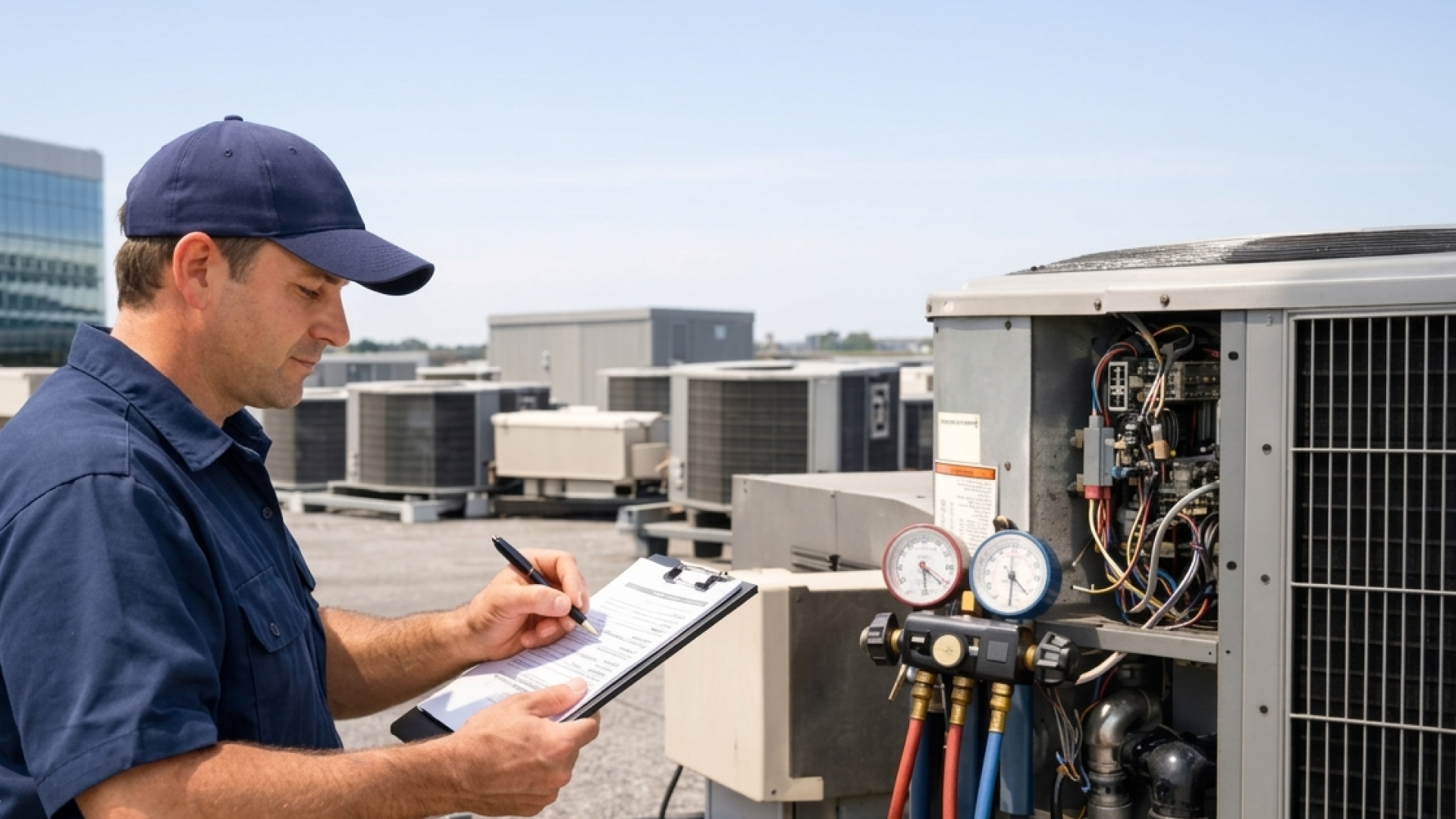
Introduction A commercial HVAC system rarely fails at a convenient time. A rooftop unit can stop cooling during a busy workday, an air handler can begin moving less air across occupied areas, or a refrigeration system can struggle when a business is already dealing with a full workload. For facility managers, these problems are more than repair requests—they can affect comfort, productivity, equipment performance, and day-to-day operations.
That is why a commercial preventive maintenance program should be part of every facility's maintenance program. Preventive maintenance focuses on inspecting, cleaning, testing, adjusting, and servicing HVAC equipment before minor issues develop into larger operational problems.
A useful maintenance plan should cover more than changing filters. Facility managers need to consider air distribution, electrical components, controls, condensate drainage, outdoor equipment, heating components, commercial refrigeration equipment, safety devices, and maintenance records.
This guide explains what to include in a practical commercial HVAC preventive maintenance checklist, how often different tasks should be performed, what facility managers should monitor, and when professional commercial HVAC service is appropriate.
What Is Commercial HVAC Preventive Maintenance?
Commercial HVAC preventive maintenance is a planned process of inspecting and servicing heating, ventilation, and air-conditioning equipment at scheduled intervals. The purpose is to identify wear, contamination, abnormal operation, and developing mechanical or electrical problems before they cause an unexpected shutdown.
A preventive maintenance program can apply to equipment such as:
Rooftop HVAC units
Packaged air-conditioning systems
Split commercial HVAC systems
Air handlers
Furnaces and heating equipment
Heat pumps
Exhaust and ventilation systems
Condensers and evaporators
Commercial refrigeration equipment
Thermostats and building controls
Fans, belts, motors, and dampers
The exact maintenance requirements depend on the equipment type, manufacturer recommendations, operating conditions, and facility needs. Learn more about why preventive HVAC maintenance saves businesses thousands.
Why Facility Managers Need a Preventive HVAC Maintenance Plan
Reactive maintenance means waiting for equipment to fail before addressing it. While emergency repairs will sometimes be unavoidable, relying exclusively on them makes maintenance less predictable.
A scheduled program gives facility managers a way to identify developing problems during planned inspections, as detailed in our guide on what happens when you skip preventive HVAC maintenance.
Reduce Unexpected HVAC Problems
A technician may discover a deteriorating belt, restricted filter, dirty coil, loose electrical connection, or blocked condensate drain during routine service. Addressing the issue during planned maintenance can be much easier than dealing with the same problem after equipment stops operating.
Protect Indoor Comfort
Commercial buildings often have different occupancy levels throughout the day. Poor airflow, incorrect thermostat settings, dirty filters, or malfunctioning controls can create noticeable temperature differences between areas. Regular inspections help identify conditions that can interfere with consistent heating and cooling, preventing hot and cold spots.
Support Equipment Performance
HVAC equipment needs adequate airflow, clean heat-transfer surfaces, proper electrical operation, and correctly functioning controls. Preventive maintenance helps keep these basic operating conditions in check and improves commercial HVAC energy efficiency.
Improve Maintenance Planning
Facility managers also need to plan labor, service appointments, budgets, and equipment replacement. Maintenance records can reveal recurring problems and help identify equipment that may require closer attention.
Commercial HVAC Preventive Maintenance Checklist
A good checklist should be specific enough that technicians and facility staff know what needs to be inspected without turning the process into a collection of vague instructions. The following checklist provides a practical framework.
1. Inspect and Replace Air Filters
Air filters should be checked regularly because restricted filters can reduce airflow and increase the workload placed on HVAC equipment. Find out more about how dirty HVAC filters affect commercial energy bills.
Excessive dirt or loading
Incorrect filter size
Damaged filter media
Poor filter fit
Air bypass around the filter
Signs of moisture contamination
2. Check Evaporator and Condenser Coils
Coils transfer heat and play a central role in air-conditioning operation. Dirt and debris on coil surfaces can interfere with heat transfer and airflow.
Dirt accumulation
Bent fins
Corrosion
Ice formation
Debris
Signs of oil or refrigerant leakage
3. Inspect Blowers, Fans, and Motors
Air movement depends on properly operating fans, blowers, and motors. Maintenance should include checking for unusual noise, vibration, overheating, worn components, and abnormal operation.
Check Belts and Pulleys
Belts can wear, loosen, crack, or become misaligned. A belt that is too loose may slip, while excessive tension can place additional stress on components. Inspect belts for cracks, fraying, glazing, improper tension, misalignment, and unusual wear.
4. Inspect Condensate Drains and Pans
Air-conditioning systems remove moisture from indoor air. That water needs a clear path away from the equipment. Technicians should inspect drain pans, lines, traps, pump operation, and float switches.
5. Test Thermostats and Controls
A commercial HVAC system can have mechanically sound equipment and still perform poorly if its controls are not operating correctly. Check thermostats, sensors, control wiring, schedules, and system responses.
6. Inspect Electrical Components
Electrical inspection is an important part of commercial HVAC maintenance and should be performed by qualified personnel to look for loose connections, damaged wiring, overheating, or corrosion.
7. Check Refrigerant System Performance
Refrigerant-related maintenance requires trained HVAC professionals and should not be treated as a routine do-it-yourself task. A technician can evaluate system operating conditions and investigate signs of common reasons commercial ac systems stop cooling properly.
8. Inspect Heating Components
For commercial buildings that rely on heating equipment, preventive maintenance should continue beyond the cooling season. Inspect heating components, burners, heat exchangers, ignition systems, and safety controls.
9. Inspect Ductwork, Dampers, and Air Distribution
The HVAC unit itself may be operating correctly while the building still experiences poor comfort because of problems in the distribution system. For more insights, read about how air duct leaks affect commercial HVAC performance.
10. Inspect Outdoor HVAC Equipment
Outdoor commercial equipment is exposed to weather, dirt, leaves, vegetation, insects, and other debris. Keep the area around equipment clear and inspect the cabinet, coils, fan guards, and access panels.
Preventive Maintenance Schedule for Commercial HVAC Systems
There is no universal schedule that works for every commercial building. For guidance on timing, review how often should commercial HVAC systems be serviced.
Monthly or Routine Facility Checks: Facility staff can monitor visible conditions and report abnormalities such as unusual noises, strange odors, or dirty filters.
Quarterly Maintenance: Professional inspection for systems that operate frequently or in demanding environments.
Seasonal Maintenance: Heating and cooling systems should be inspected before periods of heavy seasonal demand, such as preparing your system before peak cooling season.
Annual Maintenance: Comprehensive annual service based on manufacturer requirements.
How Facility Managers Should Document HVAC Maintenance
A checklist is only useful if the information collected during maintenance can be reviewed later. Maintain records for each major HVAC asset, including equipment identification, service dates, repairs performed, and technician observations.
Signs a Commercial HVAC System Needs Attention
Preventive maintenance does not eliminate the possibility of failure. Facility managers should stay alert to the 7 signs your commercial HVAC system needs immediate repair, including:
Rooms becoming difficult to keep comfortable
Uneven temperatures
Weak airflow
Frequent cycling, which you can read more about why your commercial hvac system keeps short cycling
Unusual mechanical noises
Water leaks or ice on cooling components
Common Commercial HVAC Maintenance Mistakes
Only Changing Filters
Waiting for Equipment to Fail
Using the Same Schedule for Every Unit
Ignoring Small Water Leaks
Treating Refrigerant as a Routine Refill
When Should a Facility Manager Call a Commercial HVAC Professional?
Facility staff can perform appropriate visual checks and report operating issues, but many maintenance tasks require specialized tools, training, and safety procedures. Contact us or learn more about our team to discover how our experts can assist your facility. You can also explore our commercial HVAC services and read up on commercial HVAC repair vs emergency service.
Frequently Asked Questions
1. What should be included in a commercial HVAC preventive maintenance checklist? A commercial HVAC checklist should cover filters, coils, blowers, motors, belts, condensate drains, thermostats, controls, electrical components, refrigerant performance, heating components, ductwork, dampers, and outdoor equipment.
2. How often should commercial HVAC systems be serviced? Maintenance frequency varies by equipment type, operating hours, building conditions, and manufacturer recommendations.
3. What can facility staff check between professional HVAC inspections? Facility staff can monitor visible conditions such as dirty filters, unusual sounds, water around equipment, and temperature complaints.
4. Why is preventive maintenance important for commercial HVAC systems? Preventive maintenance helps identify developing problems, maintain appropriate operating conditions, and support indoor comfort.
5. What are common signs that a commercial HVAC system needs repair? Warning signs include weak airflow, uneven temperatures, unusual noises, water leaks, frequent cycling, and repeated breaker trips.
6. Does commercial HVAC maintenance include refrigeration equipment? A facility maintenance program can include commercial refrigeration systems, but refrigeration equipment has its own inspection and service requirements.
7. Can preventive HVAC maintenance improve system efficiency? Proper maintenance can help equipment operate under appropriate conditions by addressing issues such as restricted airflow and dirty coils.
8. Should HVAC maintenance be performed before summer and winter? Seasonal inspections help identify problems before periods of higher heating or cooling demand.
9. How should facility managers keep track of HVAC maintenance? Maintain an equipment record for each major system with service dates, inspections, repairs, and replaced parts.
10. When should a business call a commercial HVAC professional? A professional should be contacted for problems involving refrigerant systems, electrical components, combustion equipment, or complex controls.