What Causes Low Airflow in Commercial HVAC Systems? Common Causes and Solutions
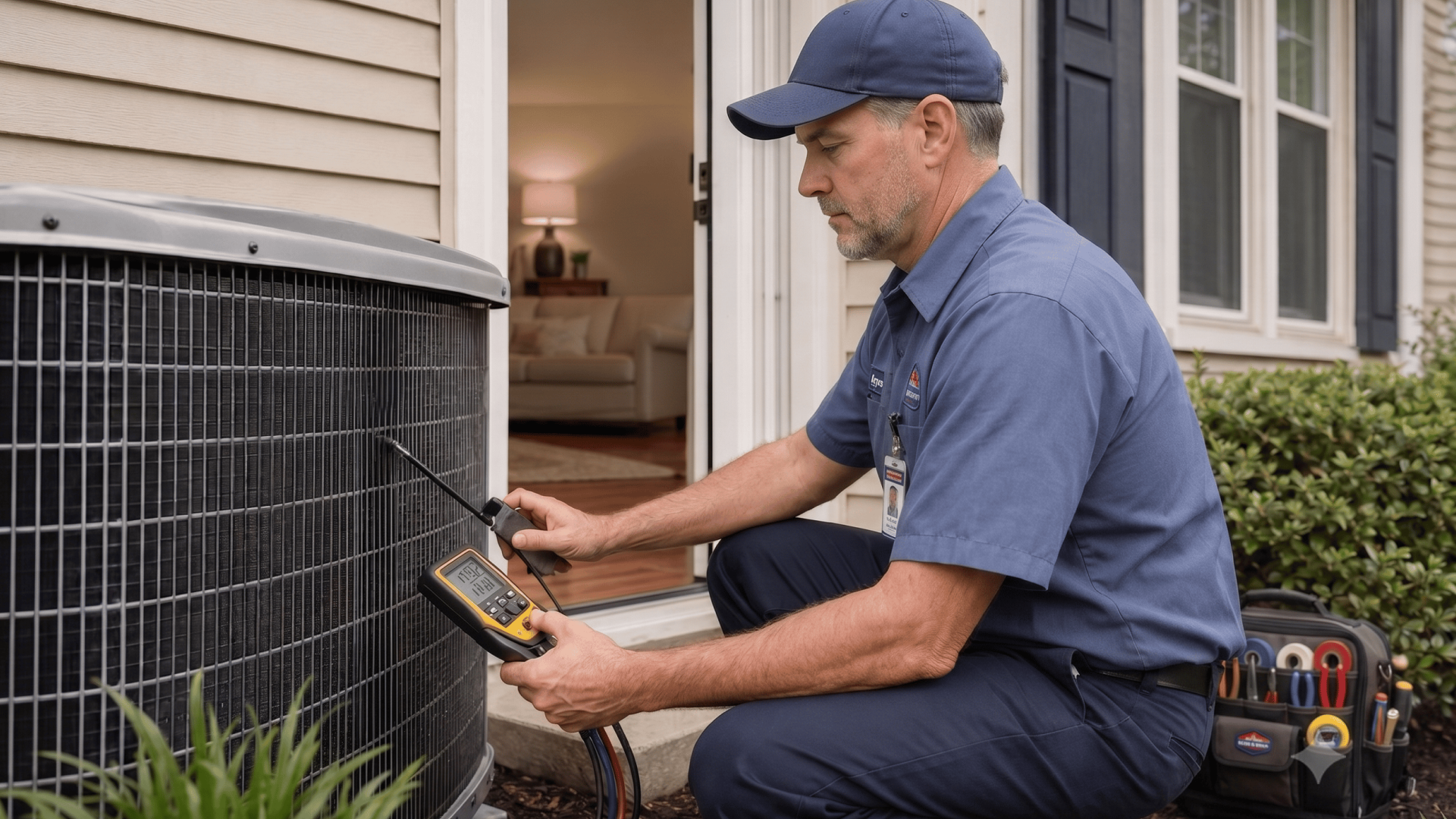
Low airflow is one of the most common signs that something is wrong with a commercial HVAC system. A building may still have heating or cooling, but rooms can feel uncomfortable, temperatures may vary from one area to another, and the system may run longer than expected.
Poor airflow is not always caused by the HVAC unit itself. A clogged filter, blocked return grille, dirty coil, damaged ductwork, failing blower motor, closed damper, or incorrect system design can all restrict the amount of air moving through a commercial building.
Understanding the cause matters because low airflow can affect comfort, indoor air quality, equipment operation, and energy use. The right solution depends on identifying where the airflow is being restricted rather than simply adjusting the thermostat or replacing a component without diagnosing the underlying problem.
This guide explains the most common causes of low airflow in commercial HVAC systems, how technicians identify them, practical solutions, and steps businesses can take to reduce recurring airflow problems.
What Does Low Airflow Mean in a Commercial HVAC System?
Low airflow means the HVAC system is not moving the expected amount of conditioned air through the building's supply and return system.
A commercial HVAC system depends on balanced air movement. The blower moves air across the heating or cooling components, supply ducts distribute conditioned air, and return ducts bring air back to the equipment. If any part of that process becomes restricted, overall airflow can decline.
Typical signs include:
Weak air coming from supply vents
Rooms that take too long to heat or cool
Uneven temperatures between areas of the building (why your commercial building has hot and cold spots)
HVAC equipment running for extended periods
Increased noise from vents or ductwork
Excessive dust around registers
Poor air circulation in certain rooms
Frequent temperature complaints from employees or customers
Frost or ice developing on an air-conditioning coil in some situations
Low airflow should not automatically be treated as a thermostat problem. The restriction may be somewhere between the return grille and the supply registers.
Common Causes of Low Airflow in Commercial HVAC Systems
Several different problems can produce similar symptoms. A proper diagnosis starts by checking the simplest restrictions before moving toward mechanical, electrical, ductwork, or design-related causes.
Dirty or Clogged Air Filters
Air filters are designed to capture airborne particles before air reaches the HVAC equipment. As the filter becomes loaded with dust and debris, resistance to airflow increases.
A severely restricted filter can make the blower work harder while reducing the amount of air reaching occupied spaces. Read more about how dirty HVAC filters affect commercial energy bills.
Commercial buildings can accumulate dust quickly, especially facilities with frequent foot traffic, construction activity, manufacturing processes, or other sources of airborne particles.
What to do
Inspect filters according to the equipment manufacturer's recommendations and the building's operating conditions. Replace filters that are dirty or excessively loaded rather than waiting until airflow problems become obvious. The correct filter type and size also matter. Installing a filter with characteristics that the system was not designed to handle can affect airflow.
Dirty Evaporator or Indoor Coils
The indoor coil plays a major role in cooling and dehumidification. Dust and debris can accumulate on the coil surface and reduce the passage of air.
A dirty coil can also interfere with heat transfer. In cooling mode, restricted airflow across the evaporator coil may contribute to the coil becoming excessively cold and potentially icing.
What to do
A qualified HVAC technician can inspect the coil and determine whether cleaning is required. Commercial coil cleaning should be performed using appropriate procedures that protect the equipment and surrounding components.
Blocked or Obstructed Return Air
Supply air cannot circulate properly if the system cannot pull enough return air back to the equipment.
Return grilles can become blocked by furniture, stored materials, boxes, shelving, temporary partitions, or other objects. In commercial spaces, changes to room layouts can unintentionally interfere with return-air paths.
A return grille may look unobstructed while the actual return path behind it is restricted.
What to do
Check that return grilles remain open and unobstructed. If a room has been remodeled or its layout has changed, the HVAC system may also need to be evaluated to determine whether the return-air arrangement remains appropriate.
Closed or Incorrectly Adjusted Dampers
Commercial HVAC systems often use dampers to control airflow through different sections of ductwork.
A damper that is closed, partially closed, damaged, or incorrectly adjusted can restrict air to an entire zone or group of rooms.
This is particularly relevant after HVAC service, tenant improvements, renovations, or changes to building usage.
What to do
A technician can inspect accessible dampers and verify that their positions match the system's intended configuration. Dampers should not simply be opened or closed at random because balancing the system requires consideration of the complete duct network.
Damaged, Disconnected, or Leaking Ductwork
Ductwork is responsible for moving conditioned air from the HVAC equipment to occupied areas. If ducts are damaged, disconnected, crushed, poorly sealed, or leaking, some of the conditioned air may never reach its intended destination (learn more about how air duct leaks affect commercial HVAC performance and indoor comfort).
A damaged duct can be especially noticeable when certain rooms receive significantly less air than others.
What to do
Inspect accessible ductwork for visible gaps, loose connections, damaged sections, insulation problems, or signs of air leakage. Professional testing may be necessary when the source of the airflow loss is not visible.
Blower Motor Problems
The blower assembly provides the force needed to move air through the HVAC system.
A worn blower motor, electrical problem, incorrect speed setting, damaged blower wheel, or mechanical issue can reduce airflow even when filters and ducts appear to be in acceptable condition.
A dirty blower wheel can also affect performance because accumulated debris changes how effectively the wheel moves air.
What to do
Blower problems require proper diagnosis because several different issues can produce similar symptoms. A commercial HVAC technician may inspect the motor, blower wheel, electrical components, controls, and operating conditions. Replacing the motor without identifying why it failed can leave the underlying problem unresolved.
Fan Speed or Control Problems
Commercial HVAC equipment relies on controls to operate fans and other components at appropriate conditions.
Incorrect fan settings, control failures, wiring problems, or problems with variable-speed equipment can affect airflow.
Some systems are designed to change blower speed depending on operating conditions. If the controls are not functioning correctly, airflow may not respond as intended.
What to do
The system should be tested under normal operating conditions. A technician can verify that control signals, fan operation, and programmed settings correspond with the equipment manufacturer's requirements.
Undersized or Poorly Designed Ductwork
Not every airflow problem is caused by a failed component.
If ductwork is undersized for the required airflow, the system may struggle to deliver adequate air to certain areas. Excessive bends, long duct runs, poor transitions, or inappropriate duct sizing can also increase resistance.
This can become apparent after a building expansion or renovation when the HVAC system is expected to serve additional spaces.
What to do
If airflow has been inadequate since installation or consistently affects particular areas, the duct design may need professional evaluation. A technician or qualified HVAC professional can assess airflow requirements, duct configuration, static pressure, and equipment capacity to determine whether the distribution system is appropriately designed.
Excessive Static Pressure
Static pressure describes the resistance the HVAC fan encounters as it moves air through the system.
High static pressure can result from several conditions, including restrictive filters, dirty coils, blocked ducts, closed dampers, undersized ductwork, or other airflow restrictions.
A system experiencing excessive resistance may have weak supply airflow even though the blower is operating.
Why static pressure testing matters
Looking at a supply register does not reveal the complete condition of the air-distribution system. Static pressure measurements can help technicians determine whether the system is operating within an appropriate range and where restrictions may exist. Testing can be particularly useful when a building has persistent airflow complaints despite routine maintenance.
Why Low Airflow Should Not Be Ignored
Low airflow is more than a comfort issue.
A commercial HVAC system is designed to move a certain amount of air across its heating and cooling components. When airflow is significantly restricted, the equipment may not operate under the conditions intended by its design.
Potential consequences can include:
Uneven indoor temperatures
Longer heating or cooling cycles
Reduced comfort
Greater strain on certain components
Poor air distribution
Moisture or coil-related problems in some cooling situations
Recurring temperature complaints
Increased maintenance needs
The exact consequences depend on the type of system, the severity of the restriction, and how long the problem continues.
How HVAC Professionals Diagnose Low Airflow
A reliable diagnosis involves more than checking whether air is coming out of a vent.
Step 1: Confirm the Complaint
The technician first determines where the problem occurs. Is airflow weak throughout the building, or only in one zone? Did the issue develop suddenly, or has it existed since installation? Are both heating and cooling affected? These details help narrow the possible causes.
Step 2: Inspect Filters and Return Air
Filters, return grilles, and accessible return paths are common starting points because restrictions in these areas can affect the entire system.
Step 3: Inspect the Equipment
The technician can examine the blower assembly, coils, fan operation, electrical components, and controls for signs of malfunction or restriction.
Step 4: Check the Duct System
Supply and return ductwork should be evaluated for damage, disconnections, leakage, obstructions, and configuration problems.
Step 5: Measure Operating Conditions
Depending on the system and complaint, measurements may include static pressure, temperature differences, airflow, electrical readings, and other operating data.
Step 6: Identify the Root Cause
The final repair should address the reason for the low airflow rather than simply treating the symptom. For example, repeatedly replacing filters without investigating a severely restricted return duct will not solve the underlying problem.
Low Airflow vs. Poor Cooling: Are They the Same Problem?
Low airflow and poor cooling can occur together, but they are not identical problems.
An HVAC system may have inadequate cooling because of airflow restrictions, but poor cooling can also result from refrigerant issues, compressor problems, control faults, outdoor coil problems, or other conditions (such as those detailed in common reasons commercial AC systems stop cooling properly).
Likewise, low airflow does not necessarily mean the refrigeration or cooling components have failed.
This distinction is why troubleshooting should begin with measurements and inspection rather than assumptions.
What Businesses Can Do to Prevent Airflow Problems
Preventive maintenance can help identify restrictions before they become major operational problems (explore commercial HVAC preventive maintenance tips and service visit details).
A practical commercial HVAC maintenance routine may include:
Inspecting and replacing filters as appropriate
Checking supply and return airflow
Inspecting coils
Examining blower components
Checking belts where applicable
Inspecting accessible ductwork
Reviewing dampers and controls
Checking operating temperatures
Monitoring unusual noises
Investigating recurring comfort complaints
Building occupants can also provide useful information. A gradual change in airflow, a room that consistently becomes uncomfortable, or a new unusual sound can be an early indication that professional inspection is needed.
Common Misconceptions About Commercial HVAC Airflow
A New Filter Always Fixes Low Airflow: A new filter can resolve a restriction caused by a severely dirty filter, but it cannot correct a disconnected duct, failing blower motor, closed damper, or undersized duct system.
More Fan Speed Always Means More Comfort: Increasing fan speed without considering the system's design can create other problems. HVAC equipment needs appropriate airflow, pressure, and temperature conditions rather than simply maximum fan speed.
One Weak Vent Means the Entire HVAC System Is Failing: A single weak register may indicate a local duct restriction, damper issue, obstruction, or duct leakage rather than a complete equipment failure.
Low Airflow Is Only a Summer Problem: Airflow affects both cooling and heating. A restriction can interfere with proper air distribution regardless of the season.
When Should a Business Call an HVAC Professional?
Professional inspection is appropriate when low airflow is persistent, widespread, worsening, or accompanied by unusual equipment behavior.
A business should pay particular attention if:
Several rooms have weak airflow
The HVAC system runs for unusually long periods
Supply air becomes noticeably weaker than before
Ice appears on cooling equipment
The blower makes unusual noises
Temperatures vary significantly between zones
Replacing the filter does not improve airflow
Airflow problems repeatedly return after basic maintenance
Commercial HVAC equipment can involve electrical, mechanical, refrigerant, and control systems. Troubleshooting beyond basic visual checks should be handled by qualified professionals.
How Professional HVAC Service Helps Identify the Problem
A commercial HVAC service provider can approach airflow complaints as a system-wide issue rather than focusing on one symptom.
The goal is to determine where the airflow is being lost or restricted and whether the equipment and distribution system are operating as intended.
For businesses, this can also connect HVAC maintenance with broader operational priorities. Reliable heating, cooling, and refrigeration support can help create a more comfortable workplace and reduce disruptions caused by unexpected equipment problems.
Companies also benefit from working with service providers who communicate findings clearly. Understanding what failed, why it failed, and what repair is being recommended makes it easier to plan maintenance and future equipment decisions.
Conclusion
Low airflow in a commercial HVAC system can originate from something as straightforward as a clogged filter or as complex as duct design, static pressure, blower performance, or system controls.
The most useful approach is to diagnose the entire air path: return air, filtration, blower operation, coils, ductwork, dampers, controls, and supply distribution. Treating only the most visible symptom can allow the underlying restriction to remain.
Regular inspections and preventive maintenance can help businesses identify developing airflow problems earlier. When weak airflow persists or affects multiple areas of a building, professional testing can determine whether the issue is mechanical, duct-related, control-related, or related to the system's overall design.
For businesses that need dependable commercial HVAC, heating, cooling, or refrigeration support, Elite Quality Commercial HVAC & Refrigeration provides professional service focused on reliable equipment operation and practical solutions. A well-maintained HVAC system is not simply about temperature control; it is part of maintaining a functional and comfortable commercial environment. You can learn more about our offerings on our commercial HVAC services page, explore our preventive maintenance programs, or contact our team today.
Frequently Asked Questions
What causes low airflow in a commercial HVAC system?
Common causes include dirty air filters, blocked return grilles, dirty coils, closed dampers, damaged or leaking ductwork, blower problems, control issues, excessive static pressure, and improperly sized ductwork.
How can I improve airflow in a commercial HVAC system?
Start by checking filters and ensuring supply and return grilles are unobstructed. If airflow remains weak, professional inspection may be needed to check coils, blowers, dampers, ductwork, static pressure, and system controls.
Can a dirty air filter cause low airflow?
Yes. A heavily loaded filter increases resistance to air movement and can reduce the amount of air passing through the HVAC system. The appropriate replacement schedule depends on the equipment, filter, building conditions, and manufacturer's recommendations.
Why is airflow weak in some rooms but normal in others?
Uneven airflow can be caused by duct leakage, closed or incorrectly adjusted dampers, obstructions, duct design problems, or differences in duct runs. A professional airflow assessment can help identify the specific restriction.
What is static pressure in a commercial HVAC system?
Static pressure represents resistance to airflow within the HVAC system. High resistance can be associated with restrictive filters, dirty components, blocked or undersized ductwork, closed dampers, or other airflow restrictions.
Can low airflow damage a commercial HVAC system?
Significant airflow restrictions can cause HVAC equipment to operate outside its intended conditions and may contribute to equipment strain or coil-related problems. The effect depends on the equipment and the severity of the restriction.
Why does my commercial HVAC system run constantly?
Extended operation can have several causes, including low airflow, inadequate system capacity, extreme outdoor conditions, thermostat or control issues, duct problems, or mechanical faults. Low airflow is one possibility but should be confirmed through proper diagnosis.
Should I increase the commercial HVAC fan speed to fix low airflow?
Not necessarily. Fan speed should be appropriate for the equipment and system design. Increasing it without diagnosing the restriction may not resolve the underlying problem and can affect system operating conditions.
How often should commercial HVAC systems be inspected?
The appropriate maintenance frequency varies according to equipment type, building use, operating conditions, manufacturer recommendations, and the consequences of equipment downtime. A qualified HVAC professional can help establish a maintenance schedule suited to the facility.
Can preventive maintenance help prevent low airflow?
Yes. Regular inspections can identify dirty filters, coil buildup, blower issues, duct problems, damper settings, and other airflow restrictions before they become larger operational concerns.