Commercial HVAC Preventive Maintenance: What Should a Service Visit Include?
Introduction
A commercial HVAC system does much more than heat or cool a building. It helps maintain comfortable indoor temperatures, supports air quality, protects temperature-sensitive products, and keeps employees and customers comfortable. When the system starts struggling, the effects can quickly reach beyond the mechanical room.
That is why preventive maintenance deserves a place in every commercial building's maintenance plan. Instead of waiting for a rooftop unit, heat pump, air conditioner, furnace, or refrigeration system to fail, routine service visits allow technicians to inspect equipment, identify developing problems, clean critical components, and verify that the system is operating as it should.
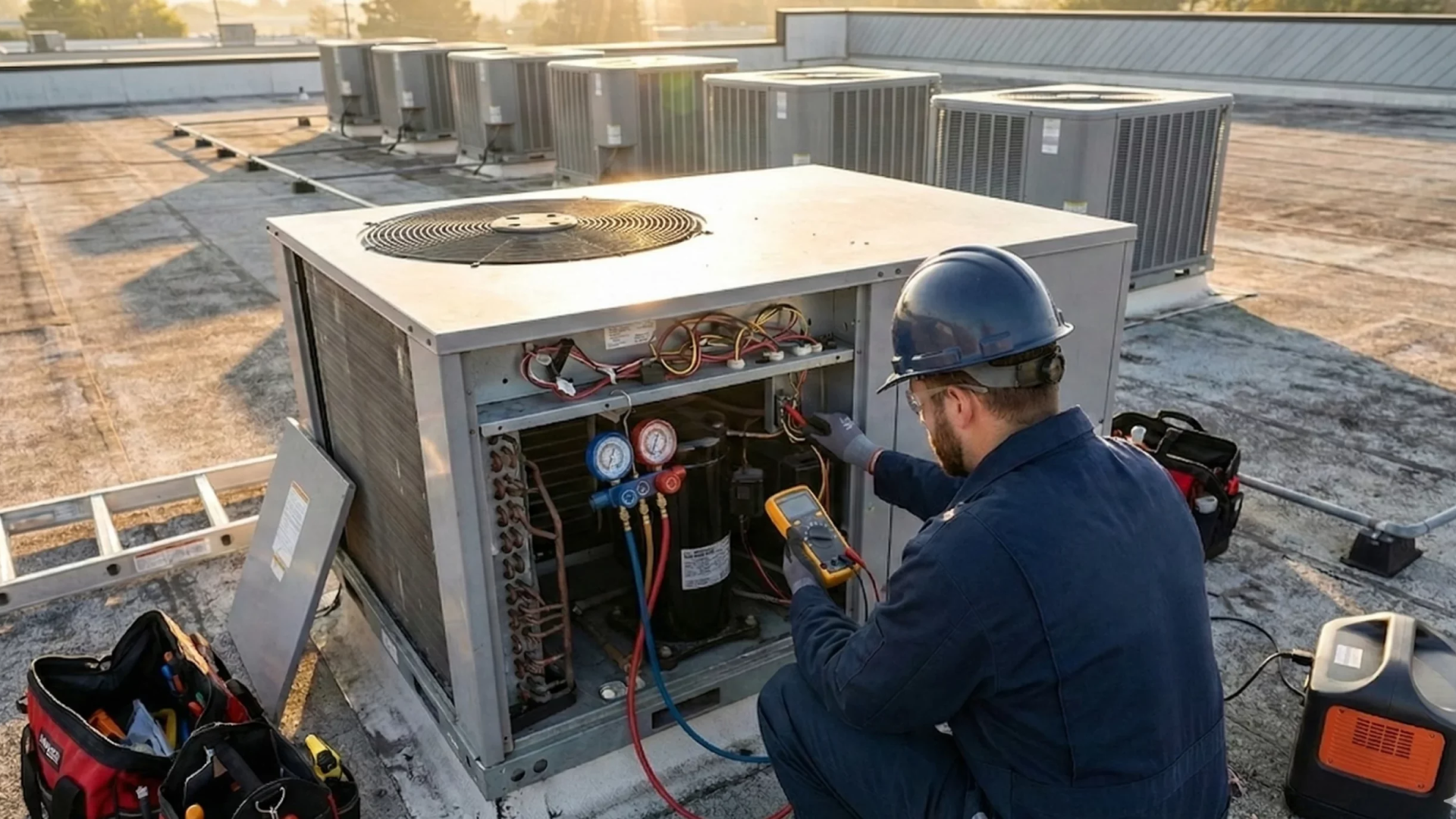
A proper commercial HVAC preventive maintenance service visit is more than changing an air filter and checking the thermostat. A thorough inspection looks at the system as a whole, including electrical components, airflow, controls, refrigerant-related components, mechanical parts, safety devices, and overall operating performance.
The exact maintenance checklist depends on the equipment, building, operating conditions, and manufacturer's recommendations. Still, most professional preventive maintenance visits follow several core steps.
What Is Commercial HVAC Preventive Maintenance?
Commercial HVAC preventive maintenance is scheduled inspection, cleaning, testing, adjustment, and servicing performed before equipment develops a major failure.
The purpose is straightforward: find and address smaller problems before they become expensive or disruptive problems.
A commercial maintenance program may cover equipment such as:
Packaged air conditioning systems
Commercial furnaces
Heat pumps
Split HVAC systems
Air handlers
Exhaust and ventilation equipment
Commercial refrigeration systems
Reach-in refrigerators and freezers
Condensing units
Evaporator systems
Thermostats and building controls
A maintenance visit should be based on the equipment manufacturer's requirements and the specific conditions of the property. A busy restaurant, retail store, warehouse, office, and food-service facility may have very different maintenance needs.
What Should a Commercial HVAC Service Visit Include?
A professional preventive maintenance visit should involve more than a quick visual inspection. The technician should evaluate the equipment's condition, operating performance, cleanliness, safety, and components that could contribute to future problems.
Here are the major areas a service visit should address.
Review of Equipment and Maintenance History
Before working on the equipment, a technician should understand what has already happened with the system.
Previous repair records can reveal recurring issues, aging components, unusual operating patterns, or parts that have already required attention. Reviewing this information helps the technician avoid treating every service call as an isolated event.
The technician may also review:
Equipment age and model
Previous repairs
Existing maintenance concerns
Manufacturer recommendations
Previous refrigerant or electrical issues
Recurring comfort complaints
Filter replacement history
This background can make the inspection more targeted and useful.
Visual Inspection of the HVAC System
The service visit generally begins with a careful visual inspection.
The technician looks for obvious signs of wear, damage, corrosion, leaks, loose components, dirt buildup, damaged insulation, and other conditions that could affect system performance.
A visual inspection can also identify issues around the equipment. For example, blocked access, debris near an outdoor unit, damaged ductwork, or restricted airflow can create operating problems even when the main components appear functional.
Air Filter Inspection and Replacement
Air filters are a simple component, but they have a direct relationship with airflow and indoor air quality.
A dirty or improperly installed filter can restrict airflow and make HVAC equipment work harder. During preventive maintenance, the technician should inspect the filter and determine whether it needs replacement based on the system requirements and filter condition.
Filter maintenance should not be treated as a universal one-size-fits-all schedule. Building conditions, occupancy, equipment type, filter type, and indoor air conditions all influence how frequently filters need attention.
Coil Cleaning and Inspection
Coils transfer heat within an HVAC system. Dirty coils can interfere with that heat-transfer process and contribute to poor system performance.
A maintenance visit should include inspection of the evaporator and condenser coils where applicable. If dirt or debris is present, appropriate cleaning can help maintain proper heat transfer.
The technician should also inspect coils for corrosion, physical damage, and other conditions that could require additional service.
Condensate Drain and Drain Pan Inspection
Air conditioning systems produce condensation during normal operation. That water needs to drain away correctly.
A clogged condensate drain can cause water to back up into areas where it does not belong. Depending on the system design, this can contribute to water damage, unpleasant odors, or equipment shutdowns.
A preventive maintenance visit should include inspection of the condensate pan, drain line, and related components. Cleaning or clearing the drainage system may be necessary when buildup is found.
Electrical Component Inspection
Electrical problems can cause HVAC equipment to operate improperly or stop working altogether.
During maintenance, a qualified technician may inspect electrical connections, wiring, contactors, capacitors, relays, disconnects, and other applicable components. Connections should be checked for signs of looseness, overheating, corrosion, or damage.
Electrical measurements may also be taken when appropriate to verify that components are operating within expected parameters.
Why Electrical Checks Matter
An HVAC system can appear to be running normally while an electrical component is beginning to deteriorate. Finding that condition during scheduled maintenance may allow the business to address it before an unexpected failure occurs.
Electrical work should always be performed by appropriately qualified professionals and according to applicable safety requirements.
Refrigerant System Inspection
Refrigerant plays a critical role in cooling and refrigeration systems. Preventive maintenance may include checking operating conditions and inspecting accessible refrigerant-related components for signs of leakage or damage.
A technician may evaluate system pressures and temperatures when appropriate for the equipment and service situation.
Low refrigerant should not simply be treated as something that needs to be "topped off." If a system has lost refrigerant, the underlying cause should be investigated. Refrigerant handling also needs to follow applicable environmental and regulatory requirements.
Blower, Fan, and Motor Inspection
Moving air efficiently requires properly operating fans, blowers, motors, and related components.
A preventive maintenance inspection can include checking motors and fan assemblies for unusual noise, vibration, wear, alignment concerns, and other signs of developing problems.
The technician may also inspect belts and related drive components on systems that use them.
Belt Inspection and Adjustment
Some commercial HVAC equipment uses belts to transfer power to fans or blowers.
Belts can become worn, cracked, loose, or improperly tensioned over time. A maintenance visit should identify these conditions and determine whether adjustment or replacement is appropriate.
Ignoring a visibly deteriorating belt can increase the risk of equipment downtime.
Thermostat and Control System Testing
The HVAC system needs accurate controls to operate properly.
Technicians should inspect thermostats, sensors, control boards, relays, and other applicable controls. They can also verify that the equipment responds correctly to operating commands.
For buildings using more advanced building automation systems, maintenance may include reviewing control sequences and identifying obvious communication or sensor issues.
What Does a Preventive Maintenance Visit Look Like Step by Step?
Although procedures vary by equipment, a typical commercial HVAC maintenance visit may follow this general sequence:
Review the equipment and service history.
Inspect the equipment and surrounding area.
Check filters and airflow-related components.
Inspect coils, drains, fans, motors, and belts where applicable.
Examine electrical connections and components.
Check refrigerant-related operating conditions.
Test thermostats, controls, and safety devices.
Clean applicable components.
Run the equipment through an operating cycle.
Document findings and recommend necessary repairs.
The final operating test is particularly useful. A technician should not simply clean components and leave. The system should be evaluated while operating to confirm that it is responding appropriately after maintenance.
How Preventive Maintenance Helps Commercial HVAC Systems
Regular maintenance does not eliminate every possible breakdown. Equipment can still fail unexpectedly, especially as it ages.
What preventive maintenance can do is give a business a better opportunity to identify developing problems before they become emergencies.
Fewer Unexpected Equipment Problems
A technician may find worn belts, dirty coils, deteriorating electrical components, drainage problems, or other issues during a scheduled visit.
Addressing those problems proactively can reduce the likelihood of certain avoidable failures.
Better Operating Performance
Clean filters, unobstructed airflow, clean coils, properly functioning fans, and correctly operating controls all contribute to proper HVAC operation.
A system that is maintained according to manufacturer recommendations is generally in a better position to perform as designed.
Improved Indoor Comfort
Commercial HVAC problems often become noticeable through uneven temperatures, weak airflow, excessive cycling, or difficulty maintaining the desired temperature.
Routine inspections can help identify mechanical or control issues contributing to those complaints.
More Predictable Maintenance Costs
Emergency repairs can be disruptive because they happen when a business is least prepared for them.
Preventive maintenance provides an opportunity to identify repair needs during scheduled visits, allowing the business to plan certain repairs rather than discovering every problem during an emergency.
How Often Should Commercial HVAC Maintenance Be Performed?
There is no single maintenance schedule that is appropriate for every commercial HVAC system.
Frequency depends on factors such as:
Equipment type
Equipment age
Manufacturer recommendations
Building occupancy
Operating hours
Indoor environmental conditions
Outdoor exposure
Dust and debris levels
Type of business
System workload
Previous maintenance history
Some commercial properties may benefit from seasonal HVAC inspections, while heavily used equipment may require more frequent attention.
Businesses should work with a qualified HVAC professional to establish a schedule based on their actual equipment and operating environment rather than relying on a generic calendar.
Preventive Maintenance vs. Emergency HVAC Repair
Preventive maintenance and emergency repair serve different purposes.
Preventive maintenance is planned in advance. Its goal is to inspect and service equipment before a serious problem develops.
Emergency HVAC repair happens after a system has already experienced a significant problem, such as a complete shutdown, major electrical failure, severe cooling issue, or other urgent malfunction.
Preventive maintenance cannot prevent every emergency. However, it can provide earlier visibility into equipment condition and help businesses address known issues before they become more disruptive.
Common Commercial HVAC Maintenance Mistakes
Even businesses that schedule maintenance can run into problems if the service is too limited.
Only Changing Filters
Filter replacement is important, but it is not a complete HVAC maintenance program.
A system can have clean filters and still have dirty coils, worn belts, electrical problems, drainage issues, or failing motors.
Ignoring Small Problems
A strange noise, intermittent shutdown, unusual odor, or inconsistent temperature may seem minor.
Those symptoms deserve attention because they can sometimes indicate a developing mechanical, electrical, airflow, or control problem.
Using the Same Checklist for Every System
A rooftop package unit does not have exactly the same maintenance requirements as a commercial refrigeration system.
A useful maintenance plan should reflect the actual equipment installed at the property.
Skipping Documentation
Service records provide valuable information over time.
Documentation should identify equipment inspected, work performed, problems discovered, parts replaced, and recommendations for future service. This creates a useful history for both the business and its HVAC service provider.
What Should a Commercial HVAC Maintenance Report Include?
A good service report should make the visit understandable to the property owner or facility manager.
Depending on the equipment and service agreement, the report may include:
Equipment inspected
Maintenance performed
Components cleaned
Measurements or operating observations
Problems discovered
Parts needing attention
Safety concerns
Recommended repairs
Follow-up requirements
Clear documentation also makes it easier to prioritize repairs. A business manager can distinguish between an immediate concern, a routine recommendation, and a component that should simply be monitored.
Preventive Maintenance for Commercial Refrigeration
Commercial refrigeration deserves special attention because temperature control can directly affect products and daily operations.
Refrigeration maintenance may include inspection of evaporator and condenser components, fans, coils, doors, gaskets, controls, drainage, electrical components, and refrigerant-related conditions.
A technician may also check whether the system is maintaining the required operating temperature and look for signs of excessive frost, poor airflow, unusual cycling, or other performance concerns.
For restaurants, grocery businesses, convenience stores, food-service operations, and other facilities that depend on refrigeration, routine maintenance can be an important part of protecting equipment and maintaining reliable operation.
How Businesses Can Prepare for an HVAC Maintenance Visit
Property managers and business owners can make maintenance visits more productive by keeping equipment information and previous service records available.
Before the technician arrives, note any symptoms employees have noticed.
For example:
One area feels warmer than another.
The system makes an unusual sound.
A unit cycles on and off more frequently than expected.
A refrigerator is struggling to maintain temperature.
Water appears near an indoor HVAC unit.
Airflow seems weaker than usual.
A thermostat does not appear to respond correctly.
Small observations from employees can provide useful clues that may not be obvious during a short inspection.
Best Practices for a Commercial HVAC Maintenance Program
A reliable maintenance strategy starts with knowing what equipment a business actually operates.
Create an equipment list that includes model information, location, approximate age, and maintenance history. Keep service records organized and track recurring issues.
It is also useful to separate maintenance findings from repair recommendations. Not every recommendation requires immediate replacement, but every significant finding should be understood and prioritized appropriately.
Businesses should also follow manufacturer maintenance requirements and applicable safety, environmental, and regulatory standards.
How Preventive HVAC Maintenance Supports Business Operations
HVAC equipment is part of the infrastructure that allows many commercial properties to function normally.
An office needs comfortable working conditions. A retail store needs a reasonable customer environment. A restaurant may depend on both climate control and refrigeration. Warehouses can have specialized temperature and ventilation requirements.
That means HVAC maintenance should be viewed as part of broader facility management rather than an isolated mechanical task.
For businesses also investing in services such as website design, SEO, Local SEO, Google Ads, AI marketing, content marketing, branding, or a broader digital marketing strategy, operational reliability matters just as much as online visibility. Marketing can bring customers to a business, but the physical experience still needs to support the expectations created online.
Questions to Ask Before Choosing a Commercial HVAC Maintenance Provider
Before entering a maintenance agreement, businesses can ask practical questions such as:
What equipment is included in the maintenance plan?
How often will inspections be performed?
Does the service include cleaning?
Are electrical components inspected?
Are refrigeration systems included?
Will service findings be documented?
How are urgent repair recommendations handled?
Does the maintenance program follow manufacturer requirements?
Who should the business contact if equipment fails between scheduled visits?
Clear answers can help a business understand exactly what it is paying for and what the maintenance program is designed to accomplish.
Conclusion
Commercial HVAC preventive maintenance should be a structured inspection and service process, not simply a filter change or quick visual check.
A thorough visit may include equipment history review, visual inspection, filter and airflow checks, coil and drain maintenance, electrical testing, refrigerant-system evaluation, motor and belt inspection, control testing, cleaning, operational testing, and detailed documentation.
The right maintenance schedule depends on the equipment and the property. Businesses should follow manufacturer recommendations and work with qualified HVAC professionals to determine what their systems require.
For commercial properties that depend on reliable heating, cooling, air conditioning, and refrigeration, regular preventive maintenance provides a practical way to monitor equipment condition, address developing concerns, and support dependable day-to-day operation.
Frequently Asked Questions
What is included in commercial HVAC preventive maintenance?
Commercial HVAC preventive maintenance typically includes equipment inspection, filter checks, coil and drain inspection, electrical checks, fan and motor inspection, control testing, cleaning, operating checks, and documentation. The exact checklist depends on the equipment and manufacturer requirements.
How often should commercial HVAC systems be serviced?
Service frequency depends on equipment type, age, operating hours, building conditions, manufacturer recommendations, and system workload. Some businesses may need seasonal inspections, while heavily used equipment may require more frequent maintenance. Learn more about how often commercial HVAC systems should be serviced.
Can preventive maintenance prevent commercial HVAC breakdowns?
Preventive maintenance cannot guarantee that an HVAC system will never fail. It can, however, help identify worn, dirty, damaged, or deteriorating components early so businesses can address certain problems before they result in unexpected downtime. Discover what happens when you skip preventive HVAC maintenance.
What is the difference between HVAC maintenance and HVAC repair?
Preventive maintenance is scheduled work intended to inspect and maintain equipment before major problems occur. HVAC repair addresses an existing malfunction, such as a failed motor, electrical problem, refrigerant issue, or system that is no longer operating properly. Read more on commercial HVAC repair vs. emergency service.
Does commercial refrigeration need preventive maintenance too?
Yes. Commercial refrigeration equipment benefits from regular inspection and maintenance. Service may include checking coils, fans, controls, drainage, doors, gaskets, electrical components, refrigerant-related conditions, and operating temperatures. View our commercial refrigeration maintenance checklist for business owners.
Why are HVAC maintenance records important?
Maintenance records show what equipment has been inspected, what work was completed, which components were replaced, and what issues were discovered. Over time, these records can help identify recurring problems and support better repair and replacement decisions.
What are signs that a commercial HVAC system needs service?
Common warning signs include unusual noises, weak airflow, inconsistent temperatures, frequent cycling, water around indoor equipment, unusual odors, rising operating concerns, or a system that struggles to maintain the desired temperature. Review the 7 signs your commercial HVAC system needs immediate repair.
Should commercial HVAC maintenance include electrical inspections?
Yes. Where appropriate, preventive maintenance should include inspection and testing of electrical connections and components. Technicians may look for loose connections, corrosion, overheating, worn components, or abnormal electrical readings that could affect system operation or safety.
Can HVAC maintenance improve system efficiency?
Proper maintenance can help equipment operate closer to its intended condition by addressing issues such as restricted airflow, dirty coils, failing components, or control problems. Actual performance depends on equipment condition, design, age, and operating environment. Check out these commercial HVAC energy efficiency tips for office buildings.
What should a business look for in a commercial HVAC maintenance provider?
Businesses should look for qualified technicians, clear maintenance procedures, proper documentation, knowledge of the equipment being serviced, attention to safety, and recommendations based on actual system conditions rather than unnecessary work. Learn how to choose the right commercial HVAC contractor for your business.