
Introduction
A commercial HVAC system can run for hours every day without attracting much attention. Employees expect comfortable indoor temperatures, customers want a pleasant environment, and business owners rely on heating and cooling equipment to operate as intended. When a refrigerant leak develops, however, the system may struggle to maintain those conditions, consume more energy, or experience repeated cooling problems.
Commercial HVAC refrigerant leaks are not always obvious. A system might continue operating while its cooling performance gradually declines. In other cases, building occupants notice warm air, unusual ice formation, or longer operating cycles before anyone suspects a refrigerant issue.
Understanding what causes refrigerant leaks, how technicians identify them, and what happens if they remain untreated helps commercial property owners make informed preventive maintenance decisions. Early detection can also prevent avoidable equipment damage and help businesses plan repairs before a minor fault becomes a larger operational concern.
What Is a Refrigerant Leak in a Commercial HVAC System?
Refrigerant is the working fluid that transfers heat through an air conditioning or heat pump system. It circulates through components such as the compressor, condenser, expansion device, and evaporator, changing pressure and state as it absorbs heat from one area and releases it into another.
A refrigerant leak occurs when this fluid escapes from the sealed refrigeration circuit through a damaged component, loose connection, deteriorated seal, or other opening.
Unlike an air filter that collects dust or a drain line that carries away condensation, refrigerant is not supposed to be consumed during normal operation. A properly functioning system circulates its refrigerant continuously.
If refrigerant levels fall because of a leak, the system may no longer transfer heat effectively. The exact symptoms depend on the equipment design, operating conditions, location of the leak, and amount of refrigerant lost.
Why Commercial HVAC Systems Depend on the Correct Refrigerant Charge
The refrigerant charge is the amount of refrigerant contained within a system. Commercial HVAC equipment is designed to operate within specific manufacturer requirements, and the correct charge helps maintain appropriate pressures, temperatures, and heat transfer.
Too little refrigerant can reduce cooling capacity and cause abnormal operating conditions. Depending on the system, it may contribute to evaporator icing, overheating, or compressor damage.
Adding refrigerant without identifying the underlying problem does not provide a lasting repair when a leak is present. The escaping refrigerant will continue to reduce the charge, and the equipment may eventually develop the same symptoms again.
What Causes Commercial HVAC Refrigerant Leaks?
Refrigerant leaks can develop from normal component deterioration, installation problems, physical damage, or operating conditions that place excessive stress on the refrigeration circuit. Finding the actual cause is essential because repairing the leak without addressing its source can lead to another failure.
Common Primary Causes
1. Corrosion of Coils and Refrigerant Tubing
Corrosion is a common concern for commercial refrigeration components, particularly evaporator and condenser coils exposed to moisture, airborne contaminants, cleaning chemicals, or corrosive environments.
Copper tubing, aluminum components, and connecting materials can deteriorate over time. Corrosion may eventually create small openings that allow refrigerant to escape.
Restaurants, commercial kitchens, industrial facilities, and buildings near coastal environments may expose equipment to conditions that accelerate corrosion. The risk depends on the specific environment, equipment materials, and maintenance practices.
Technicians may inspect coils for visible deterioration, damaged fins, suspicious residue, or other signs of a possible leak. Because corrosion can affect areas that are difficult to see, electronic leak detection or other specialized testing may be necessary.
2. Loose Fittings and Poorly Made Connections
Commercial HVAC systems contain numerous joints, fittings, brazed connections, valves, and service ports. These connections must remain properly sealed as the equipment experiences changes in temperature, pressure, and vibration.
Improperly tightened fittings, defective joints, or poor brazing work can create leak paths. A connection that appears secure from the outside may still allow refrigerant to escape under operating conditions.
Installation quality matters because a small defect can become more noticeable after repeated heating and cooling cycles. Technicians investigating recurring refrigerant loss should examine accessible joints and connections rather than assuming that a coil or compressor must be responsible.
3. Vibration and Mechanical Stress
Compressors, fans, pumps, and other moving equipment can generate vibration during operation. If refrigerant tubing is inadequately supported or runs too close to vibrating components, repeated movement can stress the piping and its connections.
Over time, this stress may cause tubing fatigue, cracked joints, or loosened fittings.
Mechanical stress can also result from equipment that has shifted on its mounting, damaged supports, or piping installed without sufficient allowance for movement and thermal expansion.
A durable repair should address the damaged section and the reason it failed. Simply sealing a crack without correcting excessive vibration may leave the system vulnerable to another leak.
Additional Contributing Causes
4. Aging Seals, Valves, and Gaskets
Commercial HVAC equipment contains seals and gaskets designed to prevent refrigerant from escaping at specific connection points. These materials can deteriorate with age, heat exposure, chemical contact, or repeated maintenance.
Service valves and access ports may also develop leaks if their sealing surfaces, caps, or internal components become damaged.
Older equipment deserves careful inspection, but age alone does not prove that a system has a refrigerant leak. A qualified technician should test suspected areas and determine whether the problem requires a seal replacement, valve repair, or another corrective action.
5. Improper Installation or Previous Repairs
A refrigerant leak may originate from an installation defect or an earlier repair that did not fully resolve the problem.
Potential issues include poorly brazed joints, damaged tubing, incorrect component installation, and inadequate testing before equipment is returned to service.
Repeated refrigerant loss after multiple service visits deserves closer investigation. The original leak may not have been located accurately, a second leak may exist, or the previous repair may not have addressed the underlying cause.
Proper commissioning, pressure testing, evacuation, and leak verification help establish whether a system is ready for normal operation.
6. Physical Damage to Refrigerant Lines and Coils
Refrigerant tubing can be damaged during construction, renovation, equipment replacement, or routine work around mechanical spaces.
A dropped tool, accidental impact, improperly positioned ladder, or drilling near concealed piping may damage a refrigerant line. Outdoor equipment can also be exposed to impacts, debris, or other physical hazards.
Commercial property managers should ensure that contractors know where accessible refrigerant lines and mechanical equipment are located. Protecting vulnerable piping and maintaining adequate clearance around HVAC equipment can reduce avoidable damage.
7. Excessive Pressure and Abnormal Operating Conditions
Refrigeration circuits operate under pressure, and their components are designed to withstand specified operating conditions. Problems such as restricted airflow, dirty condenser coils, faulty controls, or other equipment malfunctions can contribute to abnormal pressures or temperatures.
These conditions do not automatically mean a leak will occur. However, excessive mechanical stress or operation outside the equipment's design limits may worsen existing weaknesses or contribute to component failure.
A technician should evaluate the complete operating system rather than treating every pressure abnormality as proof of a refrigerant leak.
What Are the Warning Signs of a Commercial HVAC Refrigerant Leak?
Recognizing early warning signs helps businesses arrange an inspection before cooling performance deteriorates further. None of the following symptoms confirms a refrigerant leak on its own, but several occurring together justify professional investigation.
1. Reduced Cooling Performance
One of the most noticeable symptoms is an HVAC system that runs but fails to cool the building adequately.
Employees may report warm areas, uneven temperatures, or rooms that take unusually long to become comfortable. In a retail space, office, restaurant, or warehouse, this can affect daily operations.
Low refrigerant charge is one possible explanation. As discussed in common reasons commercial AC systems stop cooling properly, dirty filters, restricted airflow, faulty sensors, failing compressors, and other mechanical issues can produce similar symptoms, so diagnosis should consider multiple possibilities.
2. Longer Operating Cycles and Rising Energy Use
An air conditioning system may run for extended periods because it cannot satisfy the thermostat setting efficiently. Building owners may notice longer cooling cycles or an unexpected change in electricity consumption.
A refrigerant leak can contribute to this behavior, but outdoor temperatures, occupancy, ventilation requirements, thermostat settings, and equipment condition also influence energy use.
Comparing operating patterns with previous periods can help technicians understand whether performance has changed. Utility bills alone, however, cannot establish that refrigerant is leaking.
3. Ice on Evaporator Coils or Refrigerant Lines
Ice or frost around an evaporator coil or refrigerant tubing may indicate abnormal operating conditions.
A low refrigerant charge can contribute to low evaporator pressure and temperature, allowing moisture to freeze under certain conditions. Restricted airflow caused by a dirty filter or blower problem can also lead to icing.
If ice appears, the system should be evaluated rather than repeatedly restarted. Continued operation under abnormal conditions can worsen the problem or damage equipment.
4. Hissing Sounds or Signs of Oil Residue
A hissing sound near a refrigerant line or connection can sometimes indicate escaping refrigerant. In other cases, the noise may come from normal pressure changes, airflow, or another mechanical issue.
Oil residue around a joint or component may also help identify a suspected leak because refrigerant systems circulate lubricating oil in many designs. However, residue can have other causes, and some leaks leave no obvious visible evidence.
Technicians use these observations to guide testing rather than treating them as conclusive proof.
5. Repeated Refrigerant Top-Ups
If a commercial HVAC system repeatedly needs refrigerant added, the underlying cause should be investigated.
A properly sealed refrigeration circuit should not routinely require additional refrigerant. Repeated top-ups may indicate an unresolved leak, an inaccurate previous charge, or another service issue.
Continuing to add refrigerant without investigating the cause can increase operating costs, delay a proper repair, and allow the system to remain inefficient.
How Do HVAC Technicians Detect Refrigerant Leaks?
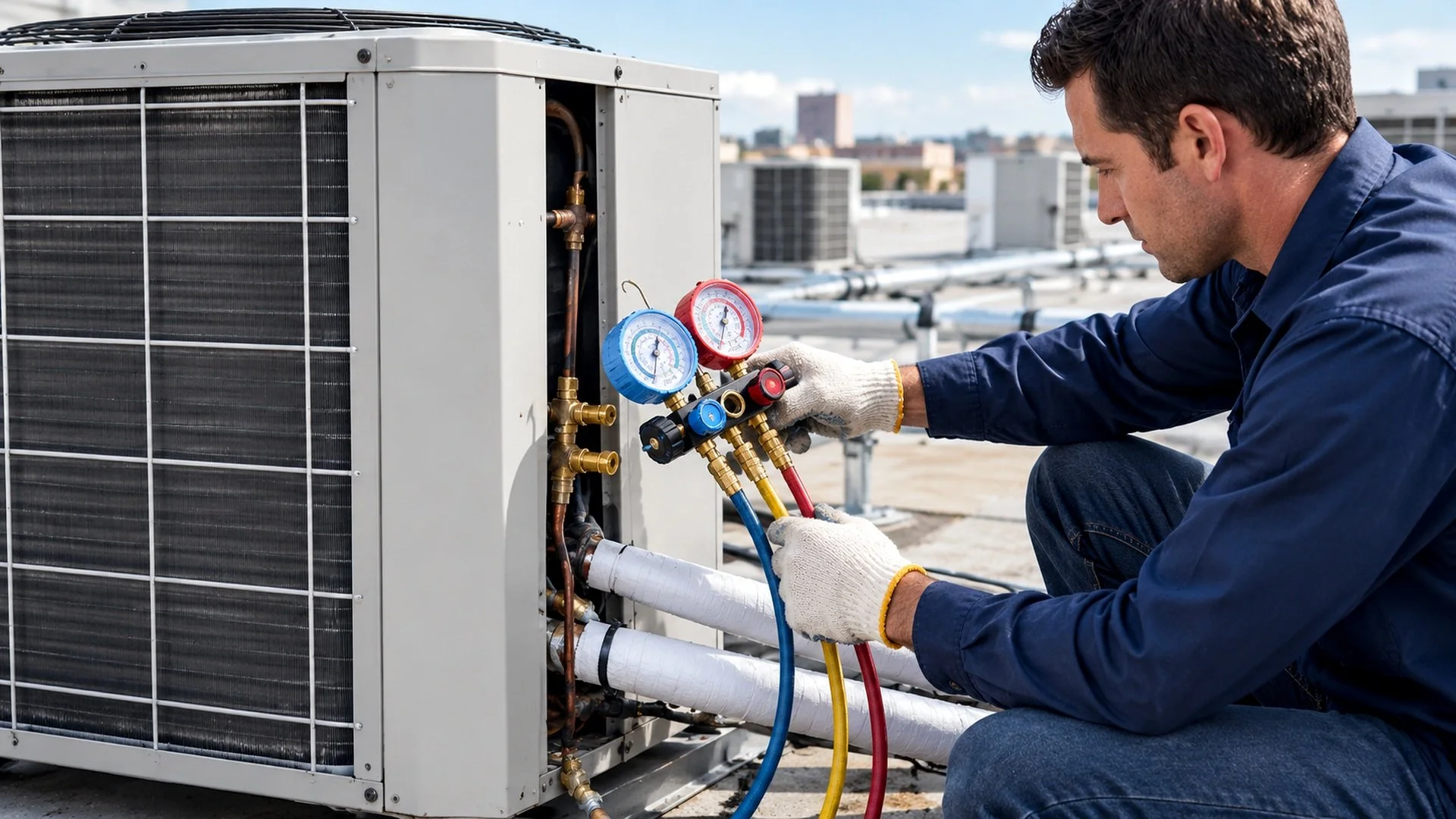
Commercial HVAC technicians use a combination of visual inspection, electronic instruments, pressure testing, and system performance measurements. The appropriate method depends on the refrigerant type, equipment design, suspected leak location, and conditions during the inspection.
Diagnostic Inspection Steps
Step 1: Review System Symptoms and Service History
The inspection usually begins with questions about equipment performance.
A technician may ask when the cooling problem started, whether the system has needed refrigerant previously, whether a component was recently replaced, and whether the problem appears during particular operating conditions.
Previous service records can reveal patterns, such as repeated pressure abnormalities or recurring refrigerant loss after a repair. This information helps narrow the investigation and avoid replacing parts without sufficient evidence.
Step 2: Inspect Accessible Components
Next, the technician examines accessible refrigerant lines, fittings, coils, service valves, and other potential leak locations.
The inspection may reveal corrosion, damaged tubing, loose connections, oil residue, or physical defects. The technician also evaluates airflow, filters, condenser conditions, and other factors that can cause symptoms similar to those of a refrigerant leak.
A careful inspection helps distinguish a refrigerant problem from a separate mechanical or airflow issue.
Detection Methods and Testing Procedures
Step 3: Use an Electronic Refrigerant Leak Detector
Electronic leak detectors are designed to identify refrigerant escaping into the surrounding air. Depending on the instrument, they may use heated-diode, infrared, or other sensing technologies.
The technician moves the detector probe around suspected joints, valves, coils, and tubing connections according to the instrument manufacturer's instructions.
When the detector signals a possible leak, the technician may repeat the test or use another method to confirm the location.
Electronic detection is particularly useful for small leaks that are difficult to see. Its effectiveness depends on the detector's compatibility, calibration or verification requirements, environmental conditions, and the technician's technique.
Step 4: Apply an Approved Leak Detection Solution
A compatible leak detection solution can help identify leaks at accessible joints and fittings.
The solution is applied to the suspected area as directed by the product manufacturer. Escaping gas may produce visible bubbles, indicating a possible leak.
This method is straightforward for accessible connection points but may not be practical for every location, such as concealed piping or difficult-to-reach coil surfaces.
The solution must be suitable for the materials and application. Household detergents should not automatically be substituted for products intended for refrigerant leak detection.
Step 5: Conduct Pressure Testing When Appropriate
If the leak has not been located, a technician may perform a controlled pressure test using an approved procedure and suitable test equipment.
The circuit must be prepared according to the equipment manufacturer's instructions and applicable requirements. Technicians commonly use regulated dry nitrogen for appropriate pressure testing, never oxygen or compressed air, which can create serious hazards in refrigeration systems.
Test pressures must remain within the permitted limits for the specific equipment and components. Pressure changes must also be interpreted carefully because temperature variations can affect readings.
A pressure test can help establish whether a circuit is losing pressure, but additional methods may be needed to pinpoint the exact leak location.
Step 6: Check System Operating Measurements
Technicians may evaluate refrigerant pressures, line temperatures, superheat, subcooling, compressor behavior, and other operating measurements.
These readings help determine whether the system is operating within expected parameters and whether the refrigerant charge may be incorrect.
However, low pressure alone does not prove a refrigerant leak. Airflow restrictions, load conditions, metering-device problems, and other faults can affect system readings.
Operating measurements should be interpreted alongside leak detection results and the manufacturer's charging procedure.
Step 7: Confirm the Leak and Document Findings
Once a suspected leak is identified, the technician confirms its location using an appropriate method and determines the necessary repair.
Documentation should identify the affected component, the observed condition, the corrective work performed, and the verification steps completed.
For commercial property managers, a clear service report helps with maintenance planning, budgeting, and tracking recurring problems across multiple HVAC units.
What Happens After a Refrigerant Leak Is Found?
Detecting a leak is only part of the process. The system must be repaired correctly, checked for additional leaks, and returned to service according to the manufacturer's requirements and applicable regulations.
Repair or Replace the Damaged Component
The repair depends on the location, severity, material, and accessibility of the leak.
A technician may repair an appropriate tubing section, replace a defective valve, correct a connection, or replace a damaged coil. Some components are better replaced than repaired, particularly when corrosion is widespread or the repair would not provide reliable long-term performance.
The decision should account for equipment condition, parts availability, repair cost, and the likelihood of recurring failures.
Verify the Repair Before Recharging
After the leak is repaired, the technician should verify the integrity of the affected circuit using appropriate testing procedures.
Depending on the work performed, this may include pressure testing and additional leak detection. If the refrigeration circuit has been opened, proper evacuation may also be required to remove air and moisture before charging.
The technician then restores the refrigerant charge according to the manufacturer's specifications. Simply adding refrigerant without addressing the leak does not complete the repair.
Follow Refrigerant Handling Requirements
Commercial HVAC refrigerants must be handled by qualified personnel in accordance with applicable environmental and safety rules.
In the United States, federal Environmental Protection Agency requirements govern refrigerant handling for covered equipment and refrigerants. Requirements vary by refrigerant, equipment type, and the work being performed.
Refrigerant should not be intentionally vented when prohibited. Recovery equipment, suitable cylinders, and approved procedures may be required during service.
Property owners should also understand which refrigerant the system uses. Different refrigerants have different pressure characteristics, safety classifications, and equipment compatibility requirements.
How Can Businesses Reduce the Risk of Refrigerant Leaks?
Preventive maintenance cannot eliminate every leak, but it can help identify deterioration and installation-related concerns before they lead to major operating problems.
Schedule Routine Commercial HVAC Inspections
Maintenance frequency should reflect the equipment manufacturer's recommendations, system condition, operating hours, and building environment.
Routine inspections can include checks of coils, accessible tubing, connections, vibration, airflow, and overall operating performance. Equipment exposed to corrosive substances, heavy use, or challenging outdoor conditions may need closer attention.
Technicians can also review previous repair records to identify recurring failures that deserve further investigation. Learn more about why businesses need routine hvac inspections.
Keep Coils and Airflow Components Clean
Dirty coils and restricted airflow can interfere with heat transfer and contribute to abnormal system operation.
Regular cleaning and filter maintenance help equipment operate under its intended conditions. These tasks do not directly prevent every refrigerant leak, but they can reduce operating problems that complicate diagnosis and put unnecessary strain on components.
Cleaning methods should follow the manufacturer's guidance to avoid damaging delicate coil surfaces.
Address Vibration and Physical Damage
Inspect equipment supports, refrigerant line restraints, and accessible piping for signs of movement or damage.
Keep mechanical rooms organized, maintain safe access around equipment, and coordinate renovation work before drilling or cutting near concealed services.
Unusual vibration, repeated noise, or visible tubing damage should be evaluated rather than ignored.
Maintain Accurate Service Records
Record refrigerant additions, leak locations, replaced components, test results, and follow-up recommendations.
If the same unit repeatedly loses refrigerant, the records can help a technician determine whether previous repairs were incomplete or another part of the circuit has developed a problem.
Consistent documentation also helps property managers compare equipment condition and make informed decisions on commercial refrigeration repair vs replacement.
Common Misconceptions About Commercial HVAC Refrigerant Leaks
Misconception 1: Refrigerant Naturally Gets Used Up
Refrigerant circulates through a closed circuit. A system that repeatedly needs more refrigerant requires investigation rather than routine topping up.
Misconception 2: Warm Air Always Means a Refrigerant Leak
Warm air can result from thermostat faults, dirty filters, blower problems, electrical issues, or other mechanical failures. Testing is needed to identify the cause.
Misconception 3: Adding Refrigerant Fixes the Problem
Recharging may temporarily improve cooling if the charge is low, but it does not repair a leak. The refrigerant can escape again if the underlying fault remains.
Misconception 4: Every Leak Requires Replacing the Entire System
Some leaks can be repaired by replacing a component or correcting a connection. Replacement decisions depend on the extent of damage, equipment age, repair history, cost, and overall system condition.
Misconception 5: A System Is Safe to Ignore If It Still Cools
A unit can continue operating despite a developing leak. Delaying inspection may allow performance to decline and can increase the risk of further equipment damage.
Conclusion
Commercial HVAC refrigerant leaks can develop because of corrosion, damaged tubing, vibration, deteriorating seals, faulty connections, installation defects, or physical damage. Recognizing symptoms such as reduced cooling, recurring refrigerant loss, unusual icing, and unexplained operating changes helps businesses arrange an inspection before the problem worsens.
Professional leak detection combines visual inspection, electronic detectors, approved leak detection solutions, pressure testing, and operating measurements. No single symptom or pressure reading reliably identifies every leak, which is why an accurate diagnosis matters.
Once the leak is located, the appropriate component must be repaired or replaced, the system must be tested, and the refrigerant charge must be restored according to manufacturer specifications and applicable requirements.
For commercial property managers, the most practical approach is to implement preventive hvac maintenance tips for property managers, maintain detailed service records, and investigate recurring cooling problems promptly. These habits help protect equipment, support dependable indoor comfort, and reduce avoidable interruptions to business operations. Feel free to contact us for expert commercial assistance.
Frequently Asked Questions
1. What are the most common causes of commercial HVAC refrigerant leaks?
Common causes include corrosion of coils and tubing, loose or defective connections, deteriorated seals, vibration-related damage, poor installation, physical impacts, and damaged valves. A technician must inspect and test the system to identify the actual source.
2. How can I tell if my commercial AC has a refrigerant leak?
Possible warning signs include reduced cooling, longer operating cycles, ice on coils or refrigerant lines, unusual hissing, oil residue near connections, and repeated refrigerant additions. These symptoms can have other causes, so professional testing is necessary.
3. How do HVAC technicians find small refrigerant leaks?
Technicians may use electronic refrigerant leak detectors, compatible bubble solutions, visual inspection, and controlled pressure testing. They select methods based on the refrigerant, suspected leak location, equipment design, and accessibility.
4. Can a commercial HVAC system run with a refrigerant leak?
Yes, a system may continue operating while refrigerant escapes, but its cooling performance can deteriorate. Continued operation may contribute to icing, inefficient operation, or compressor damage. Arrange a professional inspection when a leak is suspected.
5. Does low refrigerant always mean there is a leak?
Not necessarily. Incorrect charging during previous service or another system fault may explain an abnormal refrigerant charge. However, because refrigerant should not routinely be consumed, unexplained refrigerant loss warrants a leak investigation.
6. Can a refrigerant leak increase commercial energy bills?
Yes. A low refrigerant charge can reduce heat-transfer performance and cause longer operating cycles under certain conditions. However, higher energy use can also result from weather, occupancy, dirty filters, faulty controls, or other equipment problems.
7. Can a refrigerant leak be repaired, or must the HVAC unit be replaced?
Many leaks can be repaired by correcting a connection or replacing a damaged component. Replacement may be more appropriate when damage is extensive, corrosion is widespread, repairs are impractical, or the system has other significant problems.
8. How often should commercial HVAC systems be checked for refrigerant leaks?
Inspection frequency depends on equipment requirements, operating conditions, maintenance history, and applicable regulations. Businesses should follow manufacturer recommendations and investigate unexplained refrigerant loss promptly rather than waiting for the next scheduled visit.
9. Is a commercial HVAC refrigerant leak dangerous?
The risk depends on the refrigerant, the amount released, the space, and ventilation. Some refrigerants can displace oxygen at high concentrations, while others have flammability or other specific hazards. Suspected significant releases should be handled according to emergency procedures by qualified personnel.
10. What should a business do if it suspects a refrigerant leak?
Arrange an inspection with a qualified commercial HVAC technician. Avoid attempting to open the refrigeration circuit or add refrigerant yourself. If a significant release is suspected, follow the building's safety procedures, keep people away from the affected area when appropriate, and seek emergency assistance if anyone experiences symptoms or a hazardous atmosphere is suspected.
