Introduction
As temperatures begin to drop, commercial buildings need a dependable heating system to maintain comfortable indoor conditions, protect temperature-sensitive equipment, and support daily operations. A commercial HVAC system that performed well during summer may still have problems that only become apparent when the heating cycle starts. Dirty filters, faulty ignition components, restricted airflow, worn electrical connections, and thermostat issues can all interfere with heating performance.
Preparing a commercial HVAC system for heating season means more than switching the thermostat from cooling to heat. It involves inspecting critical components, checking safety controls, testing heating operation, reviewing ventilation requirements, and addressing developing problems before colder weather increases demand.
For facility managers, property owners, restaurant operators, office administrators, and other commercial decision-makers, a structured fall preventive-maintenance-programs plan can help reduce unexpected interruptions and improve system reliability. It also provides an opportunity to identify energy waste and correct minor issues before they become more disruptive repairs.
This guide explains how to prepare commercial heating equipment for winter, which maintenance tasks deserve attention, when professional service is necessary, and how to establish a seasonal maintenance routine that supports long-term HVAC performance.
Why Commercial HVAC Preparation Matters Before Winter
Commercial heating systems often serve larger spaces and more demanding environments than residential equipment. Offices may require consistent temperatures across multiple zones, restaurants need dependable ventilation alongside heating, and retail facilities must maintain comfortable conditions for employees and customers.
When heating equipment is not prepared for seasonal operation, a relatively small fault can affect an entire area of a building. A clogged filter might restrict airflow, a failing igniter could prevent a gas furnace from starting, or an incorrectly configured control could cause the system to cycle more frequently than necessary.
Prevent Unexpected Heating Failures
Preventive HVAC maintenance helps identify developing problems before the system operates continuously during cold weather. A technician can inspect components for wear, verify operating sequences, and determine whether repairs are needed before the equipment faces heavier demand.
This is particularly valuable for businesses that cannot easily close or relocate operations when indoor temperatures become uncomfortable. Scheduling maintenance before the first cold spell also gives facility managers more flexibility when arranging repairs. Read more about this in our guide on why preventive HVAC maintenance saves businesses thousands.
Improve Energy Efficiency and Temperature Control
A commercial heating system may consume more energy than necessary when filters are dirty, airflow is restricted, controls are misconfigured, or heating components are not operating correctly.
Seasonal maintenance helps restore proper operating conditions and identify opportunities to reduce unnecessary heating demand. However, energy savings depend on the equipment, building, operating schedule, and the problems corrected during service. For more insights, explore our commercial HVAC energy efficiency tips for office buildings.
Protect Indoor Comfort and Business Operations
Uneven heating can create uncomfortable workspaces, affect customer experiences, and generate complaints from occupants. In some facilities, inadequate temperature control can also create concerns for stored products, materials, or temperature-sensitive processes.
A pre-season inspection gives businesses a chance to address these concerns before winter conditions make them more difficult to manage. You can also review our tips on commercial HVAC upgrades that improve employee comfort.
Step-by-Step Commercial HVAC Heating Season Preparation Checklist
A reliable fall HVAC checklist should cover the building's controls, air distribution, heating equipment, safety devices, and operating performance. Some tasks are suitable for facility staff, while others require a qualified commercial HVAC technician.
1. Review the System's Maintenance History
Start by reviewing previous service reports, repair invoices, equipment manuals, and maintenance records. These documents can reveal recurring issues that deserve attention before the heating season begins.
Look for:
Previous furnace ignition or burner problems.
Repeated thermostat or temperature sensor faults.
Unusual increases in heating energy consumption.
Recurring airflow complaints or uneven temperatures.
Repairs that were recommended but not completed.
Equipment approaching the end of its expected service life.
If a rooftop unit experienced repeated heating failures last winter, for example, scheduling another inspection without investigating the underlying cause may simply allow the same disruption to return.
Use the maintenance review to prioritize known problems rather than treating every heating season as a completely new starting point.
2. Inspect and Replace Air Filters
Air filters are among the most accessible components of a commercial HVAC maintenance routine. Their job is to capture airborne particles before they accumulate inside the equipment and circulate through the building.
As filters collect dust, lint, and other debris, airflow can become restricted. Depending on the system, this may reduce heating performance, increase blower workload, and contribute to overheating or protective shutdowns. Learn more about how airflow impacts bills in our article on how dirty HVAC filters affect commercial energy bills.
What Facility Staff Should Check
Inspect filters for visible dirt, damage, and improper installation.
Confirm that replacement filters match the equipment's specified size and type.
Check the manufacturer's recommended replacement interval.
Make sure filters are installed in the correct direction when directional markings are provided.
Record the inspection and replacement date.
Do not assume every commercial filter should be replaced monthly. Replacement frequency depends on filter type, building conditions, operating hours, and actual loading. Facilities with high dust levels or heavy occupancy may require more frequent attention.
A higher-efficiency filter is not automatically the best choice for every system. The filter must be compatible with the equipment's airflow requirements and available fan capacity.
3. Test Thermostats, Sensors, and Building Controls
Commercial heating equipment depends on accurate temperature readings and properly configured controls. A thermostat may appear functional while sending incorrect signals, following an outdated schedule, or communicating improperly with a building automation system.
Before winter, verify that occupied and unoccupied schedules reflect the building's actual operating hours. Check heating setpoints, zone assignments, sensor readings, and any programmed setbacks.
For buildings with a building automation system (BAS), confirm that heating commands, alarms, and temperature data are communicating as expected.
A useful example is an office that opens at 8 a.m. If the heating schedule starts too late, employees may arrive before the building reaches a comfortable temperature. Correcting the schedule may resolve the complaint without replacing equipment.
Facility staff can review ordinary settings, but control wiring, calibration, and complex programming should be handled by qualified personnel.
4. Check Vents, Ductwork, and Airflow
Proper heating requires warm air to reach occupied areas in the quantities intended by the system design. Even a functioning furnace or rooftop unit may struggle to maintain comfort if airflow is obstructed or distribution components are damaged.
Inspect accessible supply and return grilles for dust, obstructions, and signs of damage. Make sure furniture, inventory, temporary partitions, or stored materials are not blocking air outlets or returns.
A technician should investigate persistent airflow problems, damaged duct insulation, disconnected duct sections, and suspected air leakage. Duct restrictions and leakage can contribute to temperature imbalances and unnecessary energy use. You can also read about why your commercial building has hot and cold spots.
Avoid closing numerous supply registers to force more heat into another area. Commercial HVAC systems are often designed around specific airflow requirements, and changing the distribution without proper evaluation can create pressure imbalances or interfere with equipment operation.
5. Inspect Heating Equipment and Electrical Components
Commercial heating systems may use gas furnaces, electric resistance heating, heat pumps, or packaged rooftop units with different heating configurations. Each requires inspection procedures suited to its design.
A professional pre-season inspection typically includes relevant checks of:
Electrical connections, contactors, relays, and wiring.
Blower motors and fan operation.
Ignition components and flame-sensing systems on applicable equipment.
Burners and heat exchangers where applicable.
Heating elements and associated controls on electric systems.
Condensate drainage on applicable high-efficiency equipment.
Safety switches, limit controls, and other protective devices.
Equipment panels, access doors, and visible signs of deterioration.
Electrical components can deteriorate through normal use, vibration, heat exposure, and environmental conditions. Burners, ignition assemblies, and other heating components may also accumulate deposits or wear over time.
These inspections should not be treated as do-it-yourself repairs. Opening energized equipment, adjusting gas pressure, servicing ignition assemblies, or testing combustion safety devices requires appropriate training and procedures.
6. Inspect the Heat Pump or Rooftop Unit
Many commercial buildings rely on packaged rooftop units or heat pumps to provide heating and cooling. Although these systems may share some maintenance requirements, their heating operation differs from that of a conventional furnace.
For a heat pump, a technician should check heating-mode operation, refrigerant-related performance where indicated, defrost controls, reversing valve operation, and auxiliary heat operation when equipped. The outdoor coil must also be able to exchange heat effectively.
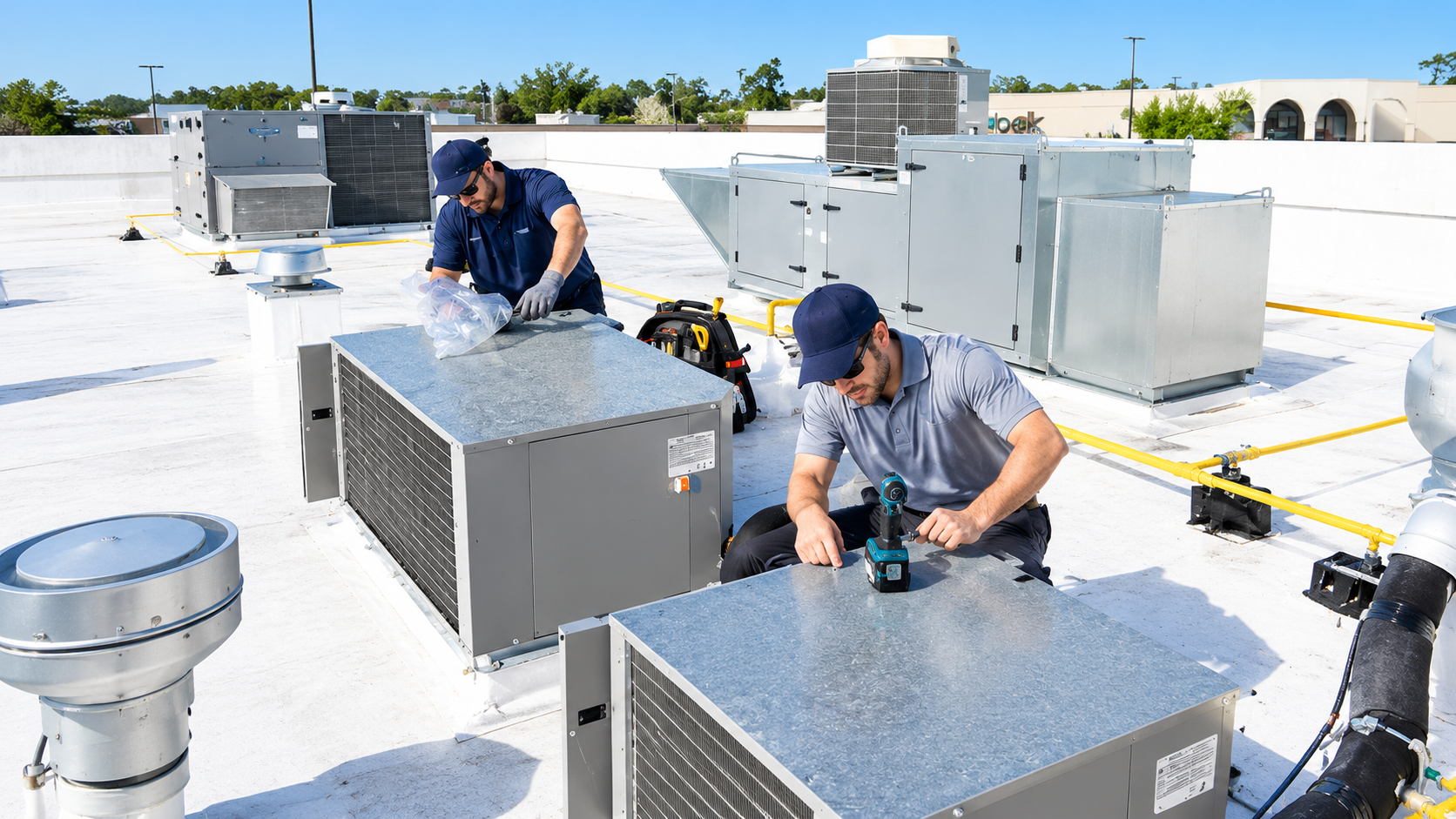
For commercial rooftop units, inspection may include the heating section, outdoor-air dampers, fan operation, control sequences, and the condition of weather-exposed components. The exact checks depend on whether the unit uses gas heat, electric heat, a heat pump, or another configuration. For details on rooftop equipment, see our guide on warning signs your rooftop HVAC unit needs repair.
Keep roof access restricted to authorized personnel. Facility staff should not climb onto a roof to inspect HVAC equipment unless they are trained and authorized to follow the site's access and fall-protection procedures.
7. Verify Ventilation and Indoor Air Quality
Heating season often means closed windows and longer periods of indoor occupancy. That makes proper ventilation, filtration, and humidity management especially relevant.
Commercial HVAC equipment must balance heating demand with the ventilation requirements of the building. Outdoor-air dampers, exhaust systems, and ventilation controls should operate as intended rather than being disabled simply to reduce heating costs.
A technician can assess whether ventilation controls, airflow, and applicable economizer or demand-controlled ventilation sequences are functioning correctly. You can also explore the importance of indoor air quality in commercial buildings.
Avoid assuming that reducing outdoor air as much as possible will always improve efficiency. Ventilation settings must comply with applicable codes and the building's design requirements while maintaining acceptable indoor environmental conditions.
8. Test the Heating Cycle Before Cold Weather Arrives
After maintenance and necessary repairs, the system should be operated in heating mode according to the manufacturer's procedures.
A functional test allows the technician to observe the equipment's startup sequence, response to thermostat demand, fan operation, temperature delivery, and shutdown behavior. Depending on the equipment, the technician may also check combustion, temperature rise, electrical readings, or diagnostic codes.
Pay attention to symptoms such as:
Repeated starting and stopping.
Delayed or failed ignition.
Unusual banging, scraping, or persistent vibration.
Weak airflow from multiple supply outlets.
Burning or electrical odors that persist beyond normal initial operation.
Heating alarms or recurring error codes.
A single test does not guarantee that a system will never fail, but it can reveal faults that would otherwise remain unnoticed until the equipment is needed every day.
If a gas appliance produces a suspected gas leak, or a carbon monoxide alarm activates, follow the building's emergency procedures, leave the affected area when appropriate, and contact emergency services or the gas utility as required. Do not continue testing the equipment.
Special Considerations for Different Commercial HVAC Systems
Not every commercial heating system follows the same maintenance routine. Understanding the equipment type helps facility managers request appropriate service.
Gas Furnaces and Gas-Fired Rooftop Units
Gas-fired equipment requires particular attention to burner operation, ignition, venting, combustion air, heat exchangers, and safety controls. A qualified technician should evaluate combustion performance and investigate any evidence of improper venting, corrosion, or abnormal operation.
Never bypass a limit switch or other safety device to keep a furnace running. Protective shutdowns may indicate an airflow, overheating, ignition, or other fault that requires diagnosis.
Commercial Heat Pumps
Heat pumps move heat rather than producing it solely through electric resistance or fuel combustion. Their efficiency and heating capacity depend on outdoor conditions, equipment design, and proper operation.
Some systems use a defrost cycle to remove frost from the outdoor coil. Temporary changes in sound or operation may occur during normal defrost, but persistent icing, inadequate heat, or frequent auxiliary heat operation deserves professional assessment.
Electric Heating Systems
Electric furnaces and electric heating elements rely on electrical components to produce heat. Maintenance should address element condition, electrical connections, airflow, sequencing controls, and protective devices.
Because electric heat can draw substantial current, loose connections or improperly rated components can create serious equipment and safety concerns. Electrical testing and repairs should be performed by qualified technicians.
Zoned HVAC and Building Automation Systems
Larger commercial facilities may have multiple thermostats, variable air volume systems, zone dampers, or centralized automation controls. In these buildings, a heating complaint may originate from a sensor, damper, schedule, or control sequence rather than the main heating equipment.
Reviewing the whole control strategy can help identify why one area is cold while another is overheated.
Common Mistakes to Avoid During Heating Season Preparation
Even businesses with regular HVAC maintenance can overlook issues that affect winter performance. A few common mistakes are worth avoiding.
Waiting Until the First Cold Spell
The first sustained drop in temperature often increases demand for heating service across an area. Waiting until employees complain about cold rooms can leave less time for troubleshooting, replacement parts, or repairs.
Schedule maintenance before the heating season begins, with additional lead time for older equipment or systems that have experienced recurring faults.
Treating a Filter Change as Complete Maintenance
Replacing filters is useful, but it does not verify the condition of burners, ignition systems, electrical connections, controls, or other components. A filter change alone cannot establish whether equipment is operating safely or delivering its intended heating capacity.
Follow the equipment manufacturer's maintenance requirements and use a professional inspection appropriate to the system.
Ignoring Small Changes in Performance
A system that takes longer to warm the building, makes a new noise, or repeatedly triggers an alarm may be showing early signs of trouble. These symptoms do not automatically mean a major repair is necessary, but they should not be ignored.
Document the symptoms, note when they occur, and share that information with the HVAC technician. Clear observations can help narrow the diagnostic process.
Using Thermostat Changes to Compensate for Equipment Problems
Increasing the thermostat setting does not necessarily make a building heat faster. If the system has a capacity, airflow, sensor, or control problem, raising the setpoint may simply extend the heating cycle without resolving the cause.
Investigate persistent comfort problems rather than relying on repeated thermostat adjustments.
How to Build a Commercial HVAC Winter Maintenance Schedule
An effective maintenance plan combines routine staff observations with scheduled professional service. The exact frequency should reflect equipment requirements, operating conditions, building occupancy, and previous service findings.
Create a Pre-Season Inspection Schedule
Plan the primary heating inspection before regular cold-weather demand begins. Include enough time to address identified issues and test the equipment again after repairs.
For buildings with several HVAC units, prepare an equipment list containing each unit's location, model, service history, and maintenance requirements. This helps technicians track completed work and prevents individual units from being overlooked.
Establish Routine Checks During Winter
Once heating season starts, facility staff can monitor basic operating conditions without opening equipment or performing specialized repairs.
A practical routine may include:
Checking indoor temperatures in representative occupied zones.
Looking for thermostat alerts and building automation alarms.
Inspecting accessible filters according to the maintenance schedule.
Keeping supply and return grilles unobstructed.
Reporting unusual sounds, odors, or repeated temperature complaints.
Recording unexpected changes in energy use or operating hours.
These checks supplement professional maintenance rather than replacing it.
Keep Maintenance Records
Document inspection dates, filter changes, repairs, equipment readings, and recommendations. Consistent records help identify recurring failures and support better budgeting decisions.
For example, if one rooftop unit requires repeated ignition repairs while comparable units operate normally, the history may help a technician determine whether a deeper component or control issue needs attention.
Maintenance records are also useful when planning capital improvements. Repeated breakdowns, unavailable replacement parts, or rising repair requirements may justify evaluating equipment replacement rather than continuing with short-term fixes.
How Heating Season Preparation Can Control Operating Costs
Commercial HVAC operating costs are influenced by equipment efficiency, building insulation, occupancy, ventilation, weather, and control settings. Preventive maintenance cannot eliminate every source of energy waste, but it helps identify problems that interfere with normal operation.
Reduce Avoidable Energy Waste
Correcting airflow restrictions, faulty sensors, inappropriate schedules, and control problems can help the system operate closer to its intended performance.
Heating schedules should reflect real occupancy. A building that remains empty overnight may benefit from an appropriate unoccupied setback, provided the setting does not conflict with freeze protection, humidity management, or process requirements.
Evaluate the Building Envelope
Heating performance also depends on the building itself. Damaged door seals, poorly sealed windows, missing insulation, and uncontrolled air leakage can increase heating demand.
Facility managers can inspect accessible doors and windows for obvious drafts and arrange repairs where needed. Larger improvements, such as insulation upgrades or air-sealing projects, should be evaluated according to the building's condition and operating priorities.
Know When Repair or Replacement Deserves Consideration
Age alone does not determine whether commercial HVAC equipment should be replaced. A newer system can have serious problems, while an older unit may continue to operate dependably with appropriate maintenance.
Consider the broader picture:
Frequency and cost of repairs.
Heating performance and occupant comfort.
Energy consumption relative to building use and weather.
Availability of parts and qualified service.
Equipment condition and manufacturer guidance.
The potential cost of an unexpected failure.
A professional assessment can help compare continued maintenance with replacement options. Any decision should consider the building's heating requirements, budget, and the cost of potential operational disruption.
When to Call a Commercial HVAC Professional
Some preparation tasks are straightforward, but heating equipment contains electrical, mechanical, and sometimes fuel-burning components that require specialized knowledge.
Arrange professional service if the system fails to heat, cycles repeatedly, trips protective controls, produces persistent unusual noises, or leaves large areas consistently colder than expected. Professional diagnosis is also appropriate when utility consumption changes unexpectedly without an obvious operational explanation.
A qualified commercial HVAC technician can inspect the equipment, test relevant controls, identify underlying faults, and recommend repairs based on the system's design.
Elite Quality Commercial HVAC & Refrigeration provides commercial heating, cooling, HVAC, and refrigeration solutions for businesses. Scheduling a contact pre-season inspection can help facility managers identify maintenance needs and plan repairs before colder conditions increase demand.
Do not operate equipment that appears unsafe simply to maintain the building's temperature. Gas odors, carbon monoxide alarms, smoke, or signs of electrical overheating require an appropriate safety response rather than routine troubleshooting.
Conclusion
Preparing a commercial HVAC system for heating season is a practical way to protect indoor comfort, support dependable operations, and identify maintenance needs before winter demand increases. The process begins with reviewing maintenance records and inspecting filters, thermostats, airflow, and ventilation. It continues with professional equipment inspections, safety checks, control testing, and verification that the system operates correctly in heating mode.
The most effective approach combines early preparation with routine monitoring throughout the winter. Facility managers should document recurring problems, address unusual operating conditions promptly, and follow the manufacturer's maintenance recommendations rather than waiting for a complete system failure.
Every commercial building has different heating requirements, equipment configurations, and operating priorities. A maintenance plan tailored to those conditions gives businesses a clearer picture of system performance and helps them make informed decisions about repairs, energy use, and long-term equipment planning.
Scheduling commercial HVAC maintenance before the heating season is underway can help businesses enter colder weather with greater confidence in their heating equipment.
Frequently Asked Questions
1. When should a commercial HVAC system be serviced before winter?
Schedule commercial HVAC maintenance before regular cold weather begins, allowing enough time to complete repairs and retest the system. The ideal timing depends on the local climate, equipment type, building schedule, and previous maintenance history.
2. What does a commercial HVAC heating season inspection include?
A typical inspection may include filter condition, airflow, thermostat operation, electrical components, heating elements or burners, safety controls, ventilation, and heating-cycle performance. The exact procedure depends on the equipment and manufacturer requirements.
3. How often should commercial HVAC filters be changed during winter?
Filter replacement frequency depends on the filter specifications, building occupancy, operating hours, and airborne particle levels. Inspect filters according to the maintenance plan and replace them when required rather than relying on one universal replacement interval.
4. Why is my commercial HVAC system running but not producing enough heat?
Possible causes include restricted airflow, thermostat problems, faulty ignition components, control issues, equipment capacity limitations, or heat pump performance problems. A qualified technician can diagnose the cause instead of relying on repeated thermostat adjustments.
5. Can preventive HVAC maintenance reduce commercial heating costs?
Preventive maintenance can help reduce avoidable energy waste by correcting airflow restrictions, control problems, and other operating faults. Actual savings depend on the system's condition, building characteristics, energy rates, and the improvements made.
6. Do commercial heat pumps need special preparation for winter?
Yes. Commercial heat pumps should be checked for heating-mode operation, outdoor coil condition, defrost controls, reversing valve function, and auxiliary heat operation where applicable. Proper preparation helps identify performance issues before sustained cold weather arrives.
7. What are the warning signs of commercial heating system failure?
Warning signs include repeated shutdowns, uneven heating, weak airflow, unusual mechanical noises, ignition problems, persistent abnormal odors, and recurring system alarms. These symptoms warrant investigation, particularly if they affect building comfort or equipment safety.
8. Should a business replace an old commercial HVAC system before winter?
Not necessarily. The decision should consider repair history, equipment condition, heating performance, energy consumption, replacement-part availability, and operational risk. A professional assessment can help determine whether continued maintenance or replacement is the more appropriate option.
9. Can facility staff prepare a commercial HVAC system without a technician?
Facility staff can check accessible filters, review thermostat schedules, keep vents clear, monitor indoor temperatures, and report unusual operating conditions. Specialized inspections, combustion testing, electrical repairs, and work involving gas components should be handled by qualified professionals.