Signs Your Commercial Thermostat Needs Replacement
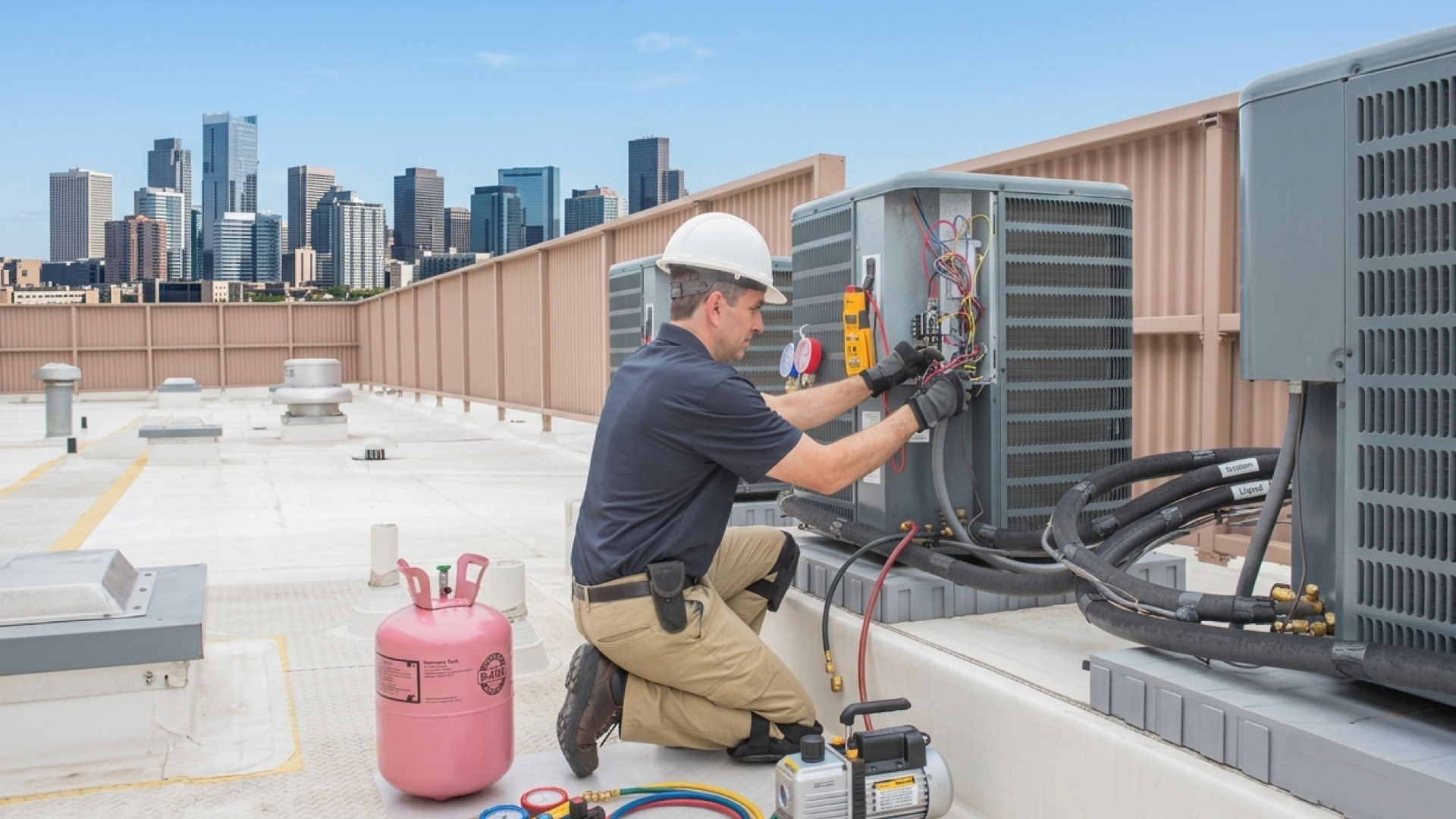
A commercial thermostat may be small compared with the rest of an HVAC system, but it has an important job. It helps control when heating and cooling equipment operates and plays a role in maintaining comfortable indoor temperatures throughout a commercial building.
When a thermostat begins to malfunction, the problem may not always be obvious at first. Employees may simply notice that certain rooms feel too warm or too cold, or the HVAC system may seem to run longer than usual. In some cases, repeated adjustments may become part of the daily routine.
Recognizing the signs of a failing commercial thermostat can help business owners and property managers determine when professional commercial HVAC service may be appropriate.
What Does a Commercial Thermostat Do?
A thermostat helps regulate indoor temperature by communicating the building's temperature requirements to the HVAC system.
In a commercial property, temperature demands can change throughout the day because of occupancy, business activity, weather, and building usage.
A properly functioning thermostat helps the HVAC system respond to those changing conditions. When thermostat performance becomes unreliable, maintaining consistent comfort can become more difficult.
1. The Building Temperature Does Not Match the Setting
One of the clearest signs of a thermostat problem is when the actual indoor temperature does not seem to match the selected setting.
For example, the thermostat may indicate a comfortable temperature while employees in the area continue to feel too warm or too cold.
This can happen for several reasons, so it is important not to assume that the thermostat is automatically the cause. Airflow, HVAC performance, building layout, and other factors can also contribute to temperature differences.
A professional evaluation can help determine what is actually causing the problem.
2. Employees Constantly Adjust the Thermostat
Frequent thermostat adjustments can be another warning sign.
If employees or building occupants repeatedly change the temperature because the space never seems comfortable, the HVAC system should be evaluated.
Constant adjustments may indicate an issue with temperature control, HVAC performance, or the way the building is being conditioned.
A thermostat that does not respond consistently can make an existing comfort problem even more frustrating.
3. The HVAC System Runs Longer Than Expected
A thermostat helps determine when heating and cooling equipment should operate.
If the thermostat is not communicating properly with the HVAC system, equipment may run longer than necessary or fail to respond as expected.
Extended operating cycles—or cases where a system keeps short cycling—can contribute to increased energy use and additional equipment wear.
However, long HVAC cycles can have many causes, including extreme outdoor weather and increased building occupancy. Professional diagnosis is important before deciding that thermostat replacement is necessary.
4. Indoor Temperatures Keep Fluctuating
Another potential sign is frequent temperature fluctuation.
The building may feel comfortable at one point and noticeably warmer or cooler later, even though the thermostat setting has not changed.
Temperature fluctuations can be caused by several HVAC-related issues, but unreliable temperature control is one possibility worth investigating.
This is especially important in commercial buildings where maintaining a consistent indoor environment supports employee and customer comfort.
5. The Thermostat Does Not Respond Properly
A thermostat that does not respond normally to temperature adjustments should not be ignored.
Problems may include:
Settings that do not appear to change properly
Delayed responses
Unexpected HVAC operation
Difficulty maintaining the selected temperature
When a thermostat behaves inconsistently, a professional can determine whether the thermostat itself needs replacement or whether another part of the HVAC system is responsible.
6. Temperature Complaints Are Becoming More Frequent
Employee and customer complaints can provide useful clues about HVAC performance.
If people regularly report that certain areas are too hot or too cold, it may be time to evaluate the system's temperature control and address underlying reasons why your commercial building has hot and cold spots.
Keep in mind that a thermostat is not always responsible for uneven temperatures. Building layout, occupancy, airflow, equipment, and outdoor weather can all affect comfort.
A complete commercial HVAC system inspection can help identify the underlying cause.
7. The Thermostat Is Outdated
Older thermostats may not provide the same level of temperature control as newer options.
As commercial HVAC systems are upgraded or building requirements change, the existing thermostat may no longer be the best match for the system. Upgrading to modern smart HVAC controls can often improve precision and efficiency.
If your commercial HVAC equipment has been upgraded but temperature control continues to be difficult, discussing thermostat compatibility with an HVAC professional may be worthwhile.
8. Energy Costs Are Increasing Without an Obvious Reason
An unexpected increase in energy costs can sometimes indicate that an HVAC system is operating inefficiently.
If equipment is running longer than necessary because of a temperature control issue, energy use may increase.
However, utility costs can change for many reasons, including weather, occupancy, operating hours, and overall HVAC condition. A thermostat should not automatically be blamed for higher energy bills.
Instead, increasing costs combined with inconsistent temperatures or unusual HVAC operation may be a reason to schedule a professional evaluation.
9. The Thermostat Does Not Maintain Consistent Comfort
A commercial thermostat should help the HVAC system respond to the building's heating and cooling requirements.
If the building consistently struggles to maintain comfortable conditions, it is worth determining whether the thermostat is contributing to the problem.
This is particularly important in buildings with:
Multiple offices
Conference rooms
Different occupancy levels
Areas with varying cooling demands
Customer-facing spaces
Implementing commercial HVAC zoning along with accurate thermostat controls can make a significant difference in these multi-room environments. A professional assessment can determine whether thermostat replacement is appropriate or whether another HVAC concern needs attention.
Thermostat Problems Are Not Always a Reason for Replacement
It is easy to assume that a malfunctioning thermostat needs to be replaced immediately. However, the thermostat may not be the actual source of the problem.
Uneven cooling in commercial office buildings and HVAC performance issues can also result from:
Airflow concerns
Building occupancy
Seasonal weather
HVAC equipment performance
Changes to the building layout
That is why professional diagnosis matters. Replacing a thermostat without identifying the underlying issue may not resolve the comfort problem.
Preventive Maintenance Can Help Identify Control Problems
Regular preventive maintenance is an important part of commercial HVAC care.
Routine service provides an opportunity to identify developing performance concerns before they become more disruptive.
Preventive maintenance can help support:
Reliable HVAC operation
Consistent indoor comfort
Efficient system performance
Seasonal preparation
Early identification of potential problems
For businesses that depend on reliable heating and cooling, learning why preventive HVAC maintenance saves businesses thousands can highlight the value of protecting their HVAC investment.
When Should a Business Replace Its Thermostat?
There is no single replacement schedule that applies to every commercial thermostat. The right decision depends on the thermostat's condition, compatibility with the HVAC system, performance, and the needs of the building.
Consider having the system professionally evaluated if you notice:
Frequent temperature fluctuations
Persistent hot and cold spots
Repeated thermostat adjustments
Unusually long HVAC operating cycles
Increasing energy costs
A thermostat that does not respond properly
Ongoing employee or customer comfort complaints
A professional HVAC assessment can determine whether thermostat replacement is appropriate or whether another component requires 7 signs your commercial HVAC system needs immediate repair.
Commercial Buildings Need Reliable Temperature Control
For offices, restaurants, retail spaces, and other commercial properties, maintaining comfortable indoor temperatures is an important part of daily operations. A thermostat that is not working properly can make that task more difficult and may contribute to unnecessary HVAC operation.
At the same time, thermostat problems can look similar to other HVAC issues. That makes it important to identify the actual cause before replacing equipment.
By paying attention to changes in indoor comfort, HVAC operation, and thermostat response, business owners can recognize potential problems earlier. Regular preventive maintenance and professional commercial HVAC service from our team can then help keep the system operating reliably throughout changing seasons. If you're noticing issues with your system, contact us today for an evaluation.